It’s easy to understand why many people believe all dogs are natural swimmers. Just think of the term “doggy paddle.” It makes it seem like swimming is a universal skill among our canine companions. However, contrary to popular belief, not all dogs are born to swim. Let’s dive into which breeds are strong swimmers, which struggle to stay afloat, and the common characteristics among both categories!
Natural Swimmers
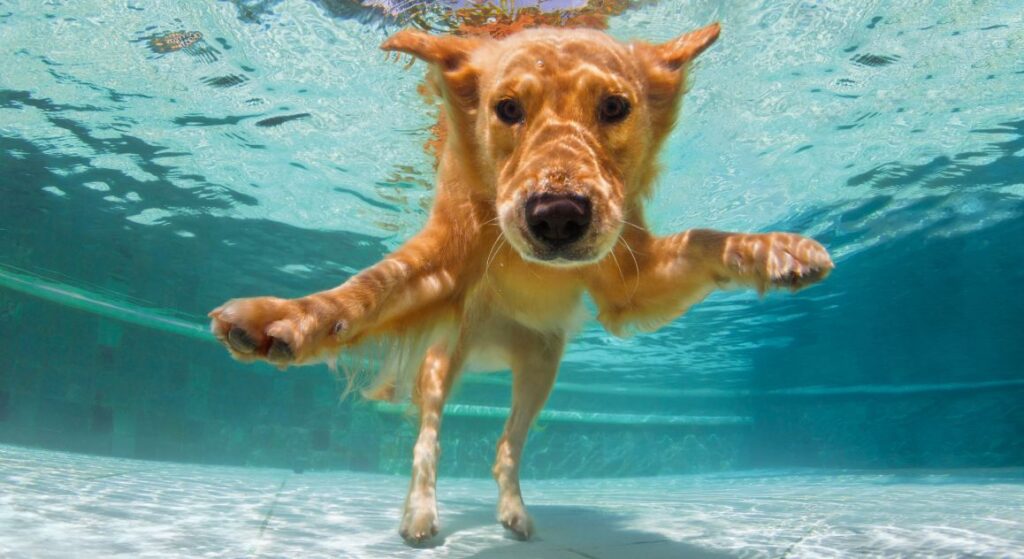
Certain dog breeds are natural swimmers. That’s thanks to their physical build and coat type. You’ll notice most water-loving dogs have double coats (an outer coat that’s made up of longer, coarser guard hairs that repel water … and a dense undercoat that provides insulation and keeps the dog warm). Hair density and coat type also play a factor. For example, curly or wavy coats tend to trap air and help with buoyancy. Dog breeds that are natural swimmers also often have webbed feet and strong limbs. Here are some top natural swimmers:
- Labrador Retrievers: These dogs are bred for retrieving games from water. Their webbed feet and strong tails make them powerful and efficient swimmers.
- Newfoundlands: Known for their swimming prowess and even used in water rescue missions, Newfoundlands have a muscular build and a thick double coat that keeps them buoyant and warm in cold water.
- Portuguese Water Dogs: Originally bred to herd fish into nets, these dogs have an innate love for water and excellent swimming capabilities. Their waterproof coats make them perfect companions for aquatic activities.
- Chesapeake Bay Retrievers: These dogs were bred for hunting waterfowl in the rough and icy waters of the Chesapeake Bay. They have a dense, waterproof coat and a strong, athletic build.
- Irish Water Spaniels: With their distinctive curly coats that repel water, Irish Water Spaniels are enthusiastic and capable swimmers, bred for retrieving in water.
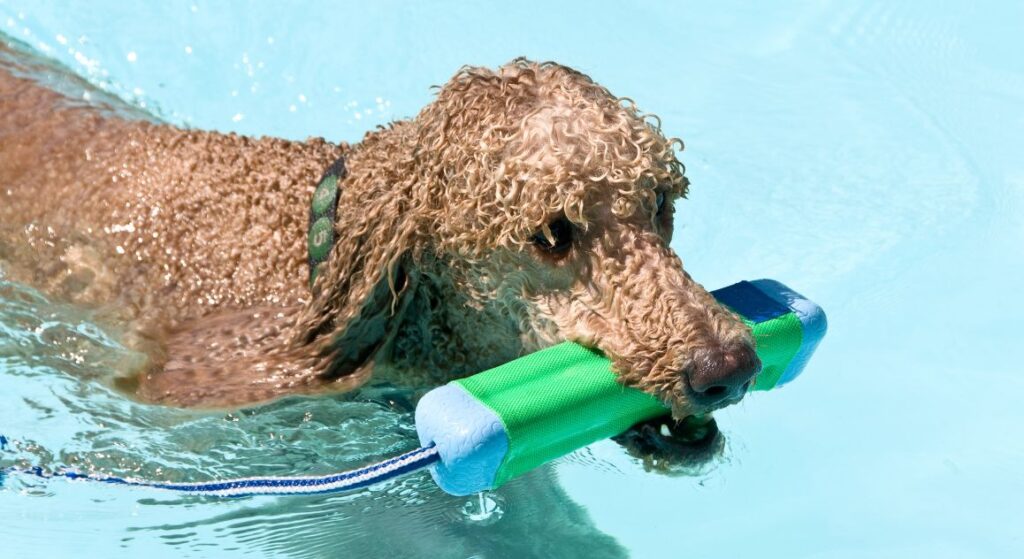
- Poodles: Originally bred for water retrieval, Poodles are excellent swimmers with their strong, athletic bodies and water-resistant curly coats.
Breeds that Struggle to Swim
While some dogs are naturals in the water, others find swimming challenging due to their body structure or coat type. Common traits among these breeds include short legs, heavy or dense bodies, and brachycephalic (AKA short-nosed) faces that complicate breathing while swimming. Additionally, some of these dogs may have thick, heavy coats that become waterlogged, making swimming even more challenging. Here are some breeds that often struggle with swimming:
- Corgis: Due to their short legs and long bodies, Corgis can struggle with swimming. Their build can make it difficult for them to keep their heads above water and paddle effectively.
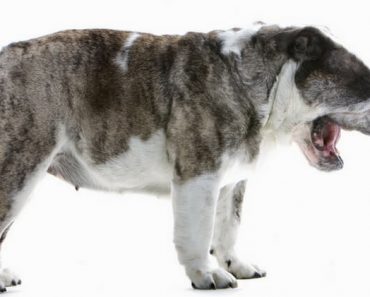
- Bulldogs: With their short snouts, stocky build, and dense bodies, bulldogs often struggle to stay afloat. Their unique body structure makes it difficult for them to keep their heads above water while paddling.
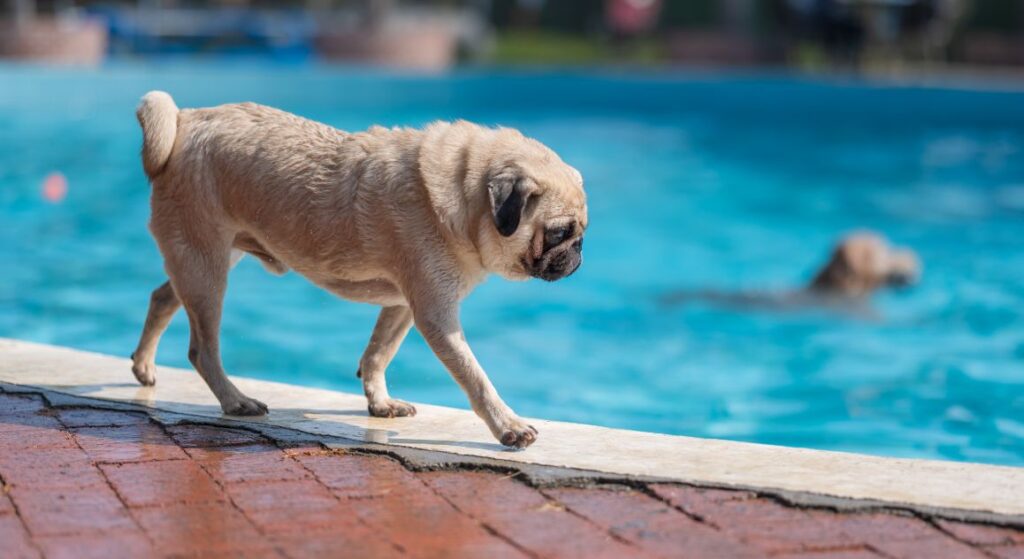
- Pugs: Similar to bulldogs, pugs have short snouts and compact bodies, which can make breathing and swimming simultaneously a challenge. Their short-nosed faces make them prone to respiratory issues, further complicating swimming.
- Basset Hounds: These dogs have short legs and long, heavy bodies, making swimming difficult and tiring. Their low center of gravity and dense bone structure can cause them to sink rather than float.
- Dachshunds: With their long bodies and short legs, dachshunds are not built for swimming. Their unique build can make it challenging to stay buoyant and move efficiently in the water.
Other Factors to Consider
Always consider your dog’s health and physical condition before encouraging them to get in the water. Even if your dog has all of the physical traits designed to help them thrive in water, they may have trouble if they’re overweight, battling a health condition, or are getting up there in years. Also, no matter your dog’s age and abilities, they may not immediately feel comfortable or confidant swimming in a pool, lake, or ocean. A positive first introduction, sufficient guidance, and ample practice will help your dog feel much more at ease.
Swim Safety: Tips for Introducing Your Dog to Water
- Start Slowly: All dogs — even breeds designed to thrive in water — tend to be afraid the first time they go into the pool. Never throw your dog into the water or force them to swim if they don’t want to. Instead, encourage them to explore the water, offering lots of praise every step of the way. You can even bring some of their water-safe toys into the pool to make it more appealing.
- Use a Life Jacket: They make life vests specifically for dogs and this small investment could be a huge lifesaver (yes, even for water-loving dogs)! The Outward Hound’s life vest has wonderful ratings. Available in five sizes, ranging from XS-XL, more than 4K people have already shared positive reviews on Amazon. It’s even earned an “Amazon’s Choice” badge!
- Supervise Closely: Whether this is your dog’s first time in a pool or they’re a seasoned swimmer, always supervise your dog when in or around the pool. Even strong swimmers can get tired or face unexpected challenges.
- Teach Exit Points: Make sure your dog knows where and how to get out of the water safely, whether it’s a pool, lake, or river.
- Be Patient: Some dogs may take to water immediately, while others need more time. Respect your dog’s comfort level and never force them into the water.