
I remember the first time I ever saw a pack walk…
I was actually at home, snuggling with my furbabies while scrolling through Instagram. That’s when I watched a stunning video on the popular account MaggieLovesOrbit, which showed Maggie and Orbit, two Boston Terriers in San Diego, surrounded by a group of other pups. And, you guessed it, they were all walking together! They marched down a breathtaking boardwalk and made their way to the beach. Wow – I was so impressed. They were all so organized, structured, and calm. It got me inspired to search for pack walks in my area!
What Are Pack Walks?
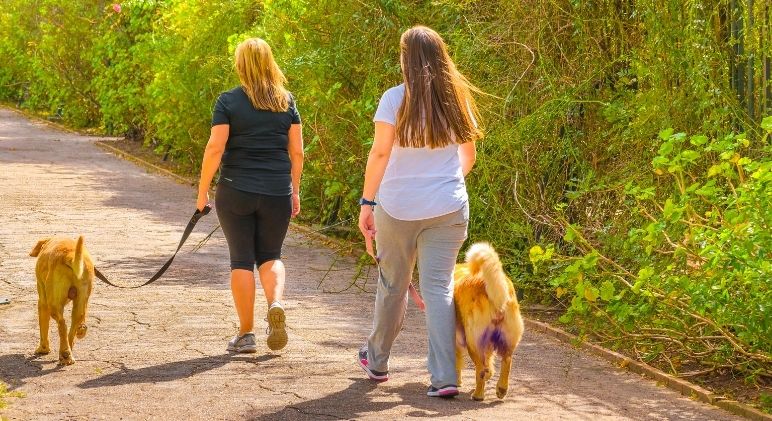
Pack walks are well-structured group walking sessions that encourage dogs to walk in rhythm. Dogs walk on leashes, oftentimes in single file, and keep a nice distance from one another. They’re close enough to experience positive interactions, but far enough away so they can’t physically interact.
A few key rules:
- No nose-to-nose
- No butt sniffing
- Dogs must remain leashed at all times
- Only traditional leashes
- No retractible leashes or leashes longer than 6′
- One dog per adult. If you have two dogs then bring your spouse or a friend.
- Spread out and respect everyone’s space. Pack walks made social distancing a thing well before COVID.
The goal? Exercise, training, and socialization.
What It’s Not
Pack walks are not playtime.
Benefits of Pack Walks
- Structured Socialization: While dogs don’t play together on pack walks, they learn to calmly co-exist with one another. It’s meant as a non-threatening environment for them. Overtime, the consistent postive exposure to one another builds trust. This is the opposite of dog parks, where unfamiliar pups run off leash and play together. With so much freedom, fights can and do happen at dog parks. Unfortunately, even one bad interaction can have a long-term impact on Fido.
- Desensitization: Many pack walking groups welcome reactive/fearful/anxious dogs. (*This depending on severity. Some dogs may require training before joining.) If your dog barks at other canines, just let the surrounding dog parents know and add some extra distance between your pup/the pack. Overtime, the positive interactions should help desensitive your furbaby to seeing other dogs in the distance. Plus, spending time in the community gets your dog more familiar with various sights, sounds, and smells.
- Leash Manners: Is your fur baby a leash puller? Or maybe Fido continuously stops to mark his territory? During group walks, your dog learns to keep up with the pack while achieving that desired loose-leash stride.
- Exercise: According to the Association for Pet Obesity Prevention, approximately 56% of dogs in the United States are overweight! Just like in humans, the extra pounds can lead to a host of health issues. Obesity puts a strain on the joints, promotes diabetes, heart and lung disease, some cancers, and the list goes on. Walking is a great way to help keep off those excess lbs.
- Boosts Mood: Exercise releases endorphins, which makes our pups happy!

Organizing or Finding a Local Pack Walk
Whether you’re looking to join an existing pack walk or create your own group walking sessions, check out the following outlets:
- Facebook: Does your neighborhood have a private Facebook group for residents? If so, this is a great place to start. Search for previous posts that mention pack walks. If a local group has already been formed, contact the leader and join. Or, if nothing pops up, make a post about it to guage interest. Don’t live in a neighborhood? No worries! You can simply search for local dog groups on Facebook. This is a great place to connect with like-minded people and get something started.
- MeetUp App: The MeetUp app is another great way to organize events and spread the word. Either search for existing groups or host your own!
- Ask a Trainer: Your local dog trainer may host pack walks or know of an established group. Trainers make great pack walk leaders since they’re experts at reading canine body language.
Advice
- Follow a color code: Have walkers attach a colorful cloth flag to their leash, disclosing their dog’s personality. For example:
- Blue = friendly
- Yellow = fearful
- Red = aggressive/reactive, do not apprach
- Switch up locations: This will expose your dog to different experiences and distractions.
- Join a couple of groups: Changing up who you walk with helps expose your dog to new people and dogs, ultimately enhancing their personal growth.