
White, apricot, brown, or black … long or short … curly or straight … spotted or one solid color. A dog’s coat is a defining characteristic. But, has your fluffy friend started experiencing hair loss?
The medical term for hair loss is Alopecia. While there are numerous causes, hair loss is often a sign that something else is going on with your pup. Identifying the underlying issue is essential for treating it. According to the Merck Manual Veterinary Manual, “If a dog has hair loss and is also scratching the area excessively, the itching should be investigated first.”
Some causes are easy to treat, while others will be much more challenging. I’ve compiled a list of 10 common reasons your dog may be losing his hair, what to look for, and what you can do about it.
1. Shedding
Shedding is the natural way dogs rid themselves of old and damaged hair, making way for new hair. Some dogs naturally shed more than others. Even breeds considered “non-shedding,” like poodles, do shed … just at a lower rate, which often goes unnoticed because the loose hairs become trapped in the poodle’s thick coat.
Even though shedding is normal, and some dogs may shed quite a bit, excessive shedding to the point of bald patches and/or spots is not normal. Keep reading for some common causes of hair loss and bald patches.

2. Allergies
Is your dog scratching, biting, and knawing at his skin? If so, he may be suffering from allergies. Like humans, dogs can get allergies. But, instead of watery eyes and sneezing, dog allergies often translate into skin issues. Think: intense itching, redness, and inflammation, which can lead to hair loss.
Some common allergy triggers include:
- Food Allergies – If Fido is suffering from food allergies, they won’t go away until you figure out which foods are causing the problem and remove them from his diet. According to VCA Hospital: “The most common food allergens in dogs are proteins, especially those from dairy products, beef, lamb, chicken, chicken eggs, soy or gluten (from wheat).” Although these are the most common foods dogs are allergic to, your pup could be allergic to any food. You can try an elimination diet. Simply eliminate food groups and reintroduce them one at a time to help pinpoint the culprit. Depending on your dog’s situation, your vet may recommend allergy testing.
- Environmental Allergies – Pollen, molds, grass, plants, and dust are some possible offenders. Many environmental allergies are seasonal – they will come and go. Therefore, depending on the time of year and what your dog is allergic to, will dictate the course of action. Find out more about seasonal allergies in dogs HERE.

3. Parasites
Fleas, ticks, mange, and mites are just a few of the many parasites that can cause hair loss and/or bald patches. According to Fetch WebMD, “Flea bites are behind most dog allergies…For a particularly allergic dog, it may take as little as one flea bite to start an allergic reaction that lingers for days.”
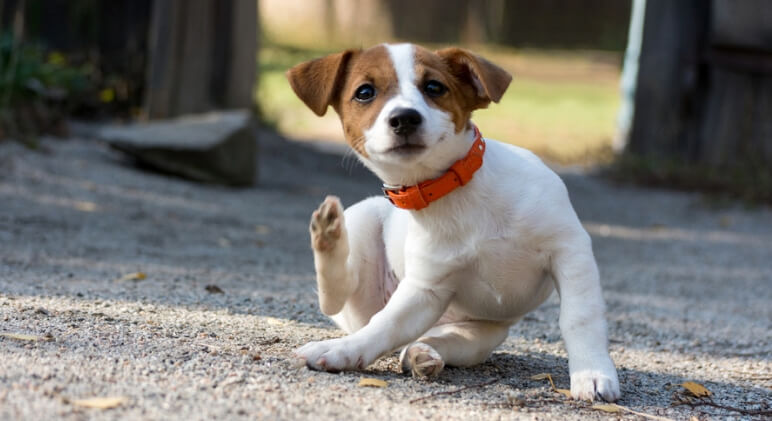
Some clues that your pooch may have a parasite infestation would include scratching, biting, knawing at his skin, redness, and inflammation. It’s important to treat any parasitic infestation that could lead to infection and a variety of other health issues. Talk to your vet about flea and tick prevention options.
4. Infections
Bacterial and fungal infections like Ringworm can cause hair loss in dogs. Signs of Ringworm include:
- Hair loss in the shape of a circle
- Infected crusty appearance
- Redness
- Inflammation
Any infection will need to be seen and treated by your vet, but, in the case of Ringworm, extra caution should be taken because it is extremely contagious and can be passed from your fur baby to you.
5. Hot Spots
A hot spot (also known as acute moist dermatitis) is an inflamed and infected area of your dog’s skin that appears red, raw, moist, and oozing. Dogs may also experience hair loss around a hot spot, as a result of licking, rubbing, and biting at the area. These itchy and painful sores can appear quickly and worsen rapidly. While hot spots are incredibly frustrating for your dog to deal with, there is some good news: They can be treated and even prevented! Read more about Hot Spots in my full article HERE.

6. Cushing’s Disease
Cushing’s is a disease where the adrenal glands produce too much of the stress hormone cortisol. Increased amounts of cortisol in the body can cause:
- Hair loss and slow regrowth
- Thinning of the skin
- Pigmented spots on the skin
- Skin infections and delayed healing
- A rounded pot-belly
- Increased appetite, thirst, and urination
Causes:
- Pituitary Tumor (85 – 90% of the cases)
- Adrenal Gland Tumor
- Long term use of oral or injectable steroids
Although most dogs with this disease are at least six years of age, younger dogs can get it as well. If you think your dog may have Cushing’s Disease, you’ll need to visit your veterinarian for evaluation and treatment.
7. Pressure Sores
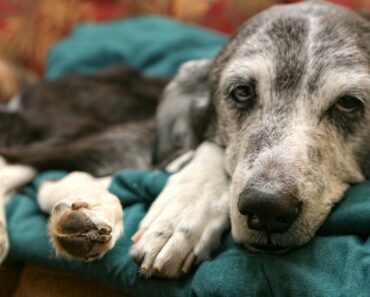
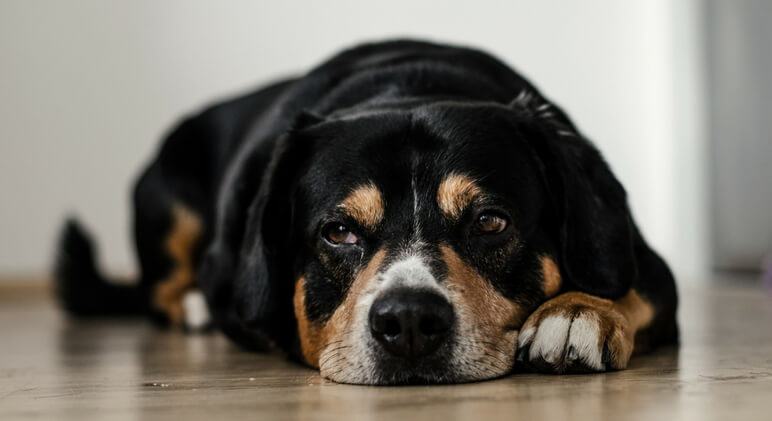
Pressure Sores are hard, hairless spots that appear dark and calloused. They’re found most often on the elbows and hips of older dogs and are caused by continually laying in the same position – pressing on the same bony area – for long periods. Once pressure sores appear, there’s not much you can do about them. Keep an eye on them to make sure they’re not cracking or getting infected. If you notice any signs of infection, call your veterinarian.
Prevention:
If your senior, disabled, or immobile Fido is laying around a lot:
- Help him get up and motivate him to move around as much as he’s able
- Provide him with a soft cushiony bed to minimize the pressure on his skin when he is laying down
- Try to reposition him every so often to avoid pressing on the same areas

8. Nutrition
You know what they say: “You are what you eat!” Good nutrition is the key to good health! And it’s the same for Fido. If he isn’t getting a nutritionally balanced diet, his health will suffer. One of the most obvious signs is a dull coat and increased shedding.
If your dog eats kibble, make sure it’s the highest quality kibble that fits into your budget – and that you’re storing it right.
Home cooking? Be sure it’s balanced. Lot’s of dog parents are home cooking these days, but the majority of home-cooked meals are not nutritionally balanced and can do a lot of harm. Check your recipes with your veterinarian to be safe. My vet recommends the recipes on BalanceIt.
Want fresh food without having to cook it? You can use a prepared meal service that does the cooking for you. You simply answer a few questions about your dog, the food service calculates how many calories your pup should eat each day based on your answers, they prepare food for your pup, and then ship it to you! There are several services out there, like Ollie and NumNumNow. I personally use The Farmer’s Dog. I’ve been feeding it to my dog for years and they LOVE it!

9. Stress
Just like with people, stress and anxiety can wreak havoc on your pup’s body. If your dog is physically healthy but is suddenly losing his hair, ask yourself if anything has changed in his world.
- Have you recently moved?
- Had a new addition to the family – a new baby or puppy? Or a loss?
- Have you been working from home during this pandemic, and now you’re back out to work? After having you home for so long, being gone can be super stressful for Fido. He doesn’t understand why, all of a sudden, you’re gone so much and he’s alone! He misses you!
Put yourself in Fido’s paws: For us, when something’s about to change, we prepare. For your dog, changes happen suddenly. There is no time to prepare and no understanding of what the heck is going on. If your pooch is stressed, try to figure out why. A little extra pampering, loving, attention, and some play and exercise should have Fido back on the road to happiness and contentment in no time.

10. Genetics
For some dogs, alopecia is in their genes. According to The Merck Manual Veterinary Manual, “Congenital or hereditary hair loss is commonly either symmetric (appearing similar on both sides of the body) or located in one area only. It is not usually accompanied by inflammation.”
Color Dilution Alopecia (CDA) is a genetic disorder affecting dogs who have inherited the recessive dd gene for hair color. The gene impairs pigmentation at the cellular level resulting in diluted coat color. CDA affects blue or fawn dogs of many breeds, but it’s so common in blue Dobermans, it’s called Blue Doberman Syndrome. Puppies can appear normal at birth with a full coat of hair and won’t begin to lose their hair until six months of age or later. Hair loss may be spotty or complete and is permanent. According to VCA Animal Hospital, “Dogs with CDA tend to have abnormalities in the hair follicles themselves, causing them to self-destruct, making it impossible for them to grow new hairs.”
CDA is a cosmetic condition and won’t cause Fido any pain. But, the hairless areas will make him more susceptible to dry skin, irritation, abrasions, sunburn, feeling cold, etc. It’s important to be proactive and take care of your dog’s skin. Dogs should be kept very clean. Shampoos should be gentle and moisturizing. Brushing should be done with soft-bristles, and if your pooch will be in the sun, harsh weather, or situations where his skin could become compromised then it’s a good idea for him to wear a shirt.
Hypotrichosis is an inherited condition where the dog’s hair follicles either don’t develop normally or at all. It mainly affects male dogs. They may be hairless at birth or could lose it within the first few months of life. Hair loss is permanent and there is no treatment. Hypotrichosis can affect a dog’s sweat glands and/or teeth. These dogs are prone to seborrhea, a skin condition, caused by an over production of sebum from the skin glands – causing redness, itching, scaly, smelly, flaky skin. There are special seborrhea shampoos on the market to provide relief.