
Did you know more than 80% of dogs over three years old have active dental disease? Unless pet parents take action, their dog’s teeth will worsen, eventually impacting their overall health. That’s why I’ve always advocated for brushing your dog’s teeth. But, sometimes, life happens … and you may find your dog’s dental care slipping through the cracks. I know this all too well.
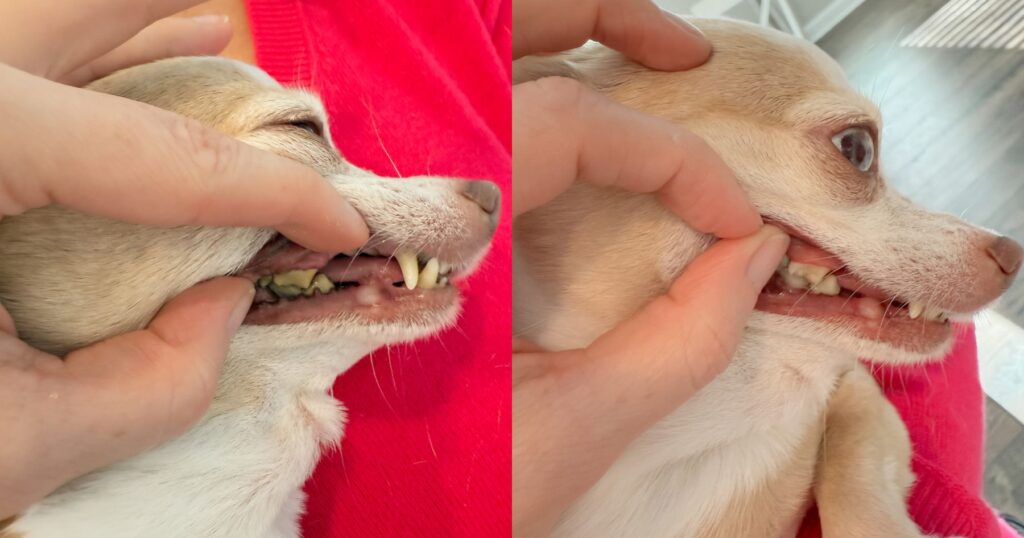
As a freshly postpartum mom, I’ll admit—I neglected my dog’s dental health for several months. Before I knew it, those pearly whites were covered in plaque and tartar that had hardened onto the teeth. Even daily brushing wasn’t enough to remove it. The only solution, it seemed, was a professional cleaning at the vet, which would mean putting my dog under anesthesia and paying a hefty bill.
I fully believe in the benefits of professional dental cleanings. But, before scheduling an appointment, I decided to try something I’d seen raved about online: an ultrasonic teeth cleaner for dogs. I wasn’t sure what to expect, but I figured it was worth a shot. And let me tell you—the results were nothing short of amazing. Here’s my experience and what you should know about ultrasonic teeth cleaners.
Signs Your Dog’s Teeth Need More TLC
But first: If you’re wondering whether your dog’s dental health needs extra attention, look out for these signs:
- Bad breath – A persistent foul smell can be a sign of plaque buildup or infection.
- Yellow or brown tartar buildup – If you can see visible plaque on the teeth, it’s time for action.
- Red or inflamed gums – This can indicate gum disease, which can lead to pain and tooth loss.
- Difficulty chewing – If your dog avoids hard food or chews on one side, it may be due to dental pain.
- Pawing at the mouth – Dogs sometimes paw at their face when experiencing oral discomfort.
- Loose or missing teeth – Advanced dental disease can cause teeth to become loose or fall out.
What is an Ultrasonic Tooth Cleaner and How Does it Work?
An ultrasonic cleaner is a tool that uses high-frequency sound waves to break down plaque and tartar on the teeth. Unlike traditional brushing, which relies on manual scrubbing, ultrasonic cleaning works through vibration and microbubbles that gently dislodge stubborn buildup. This technology is commonly used by veterinarians during professional cleanings. But now, pet-friendly versions are available for at-home use.
My Experience with the Ultrasonic Tooth Cleaner
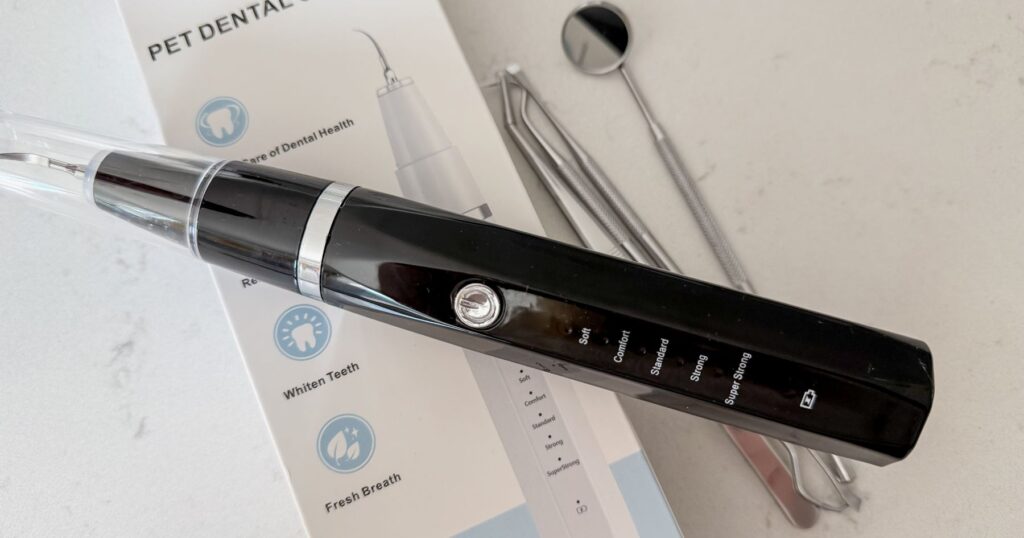
After researching and reading countless reviews, I ordered an ultrasonic teeth cleaner for dogs on Amazon. I paid $39.99 (THIS ONE). The before-and-after photos people posted almost seemed too good to be true. Could it really work that well? I was skeptical but hopeful.
When the device arrived, I sat down with my dog and introduced it slowly. I started on the lowest of five settings and worked my way up. I placed the cleaning head on one of my dog’s most tartar-covered teeth and began moving it up and down. You can’t feel any vibrations – it just makes a little noise. To my surprise, I quickly noticed chunks of tartar lifting. With some patience, praise, and a few treats, I worked through each tooth. My dog’s teeth looked drastically cleaner by the end of our first session. Just check out the before and after photo:
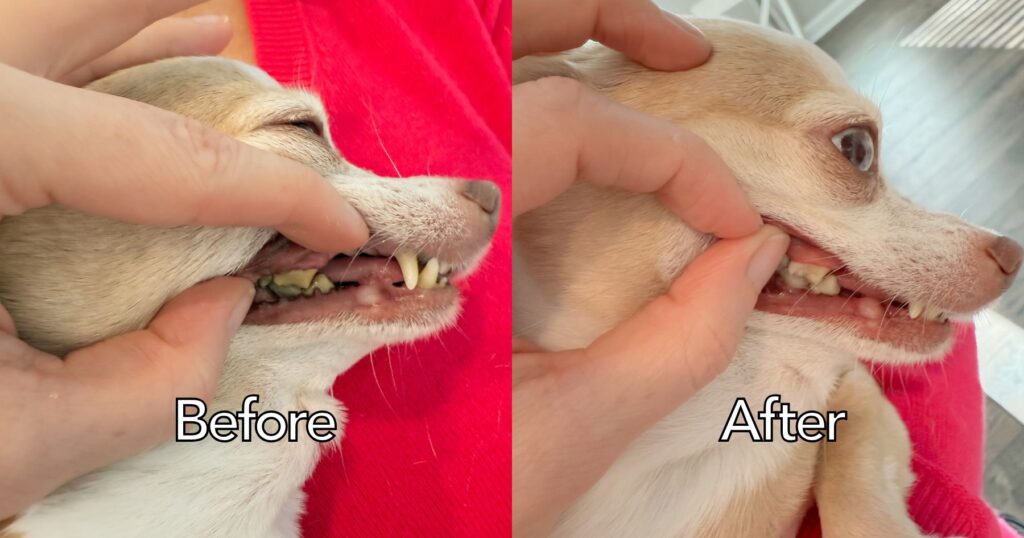
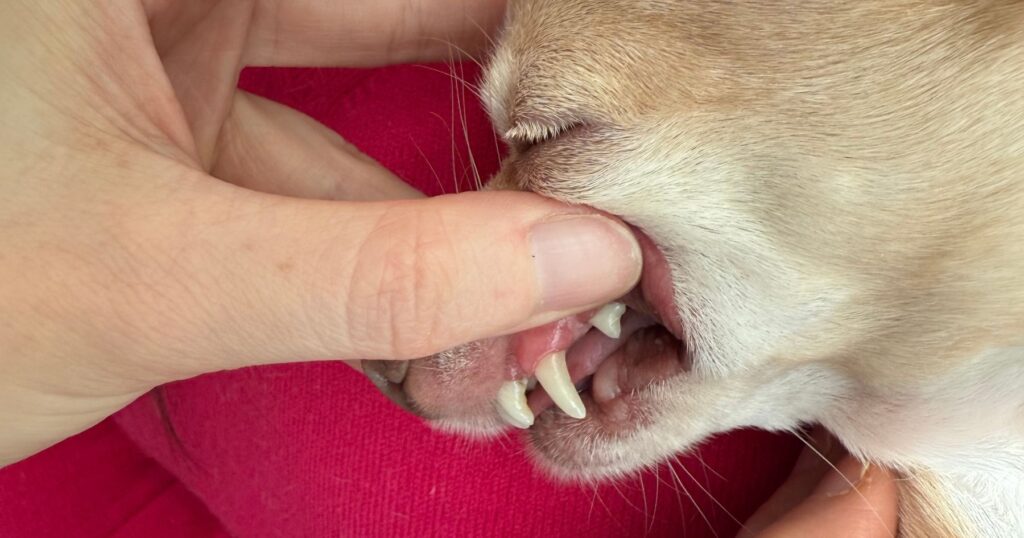
Since using the ultrasonic cleaner, my dog’s teeth are back to looking sparkly white and her breath no longer stinks (which my nose greatly appreciates). I can tell she feels better—she’s even eagerly gnawing on bully sticks again. Plus, now that we’re back to daily brushing, her gums have gone from red and inflamed to a healthy light pink.
Not only did this tool save me a significant amount of money, but my dog also avoided the stress of anesthesia for a professional cleaning. Win-win!
The Ultrasonic Cleaner I Purchased
*Note: This article is meant to share my personal experience and for informational purposes only. It is not a substitute for professional veterinary advice. Always have your dog’s teeth checked by a veterinarian and consult with them before trying any new dental care routine or product.