
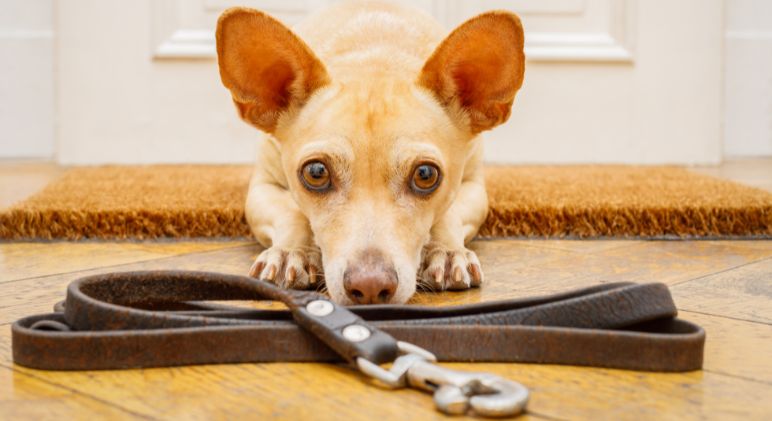
Wouldn’t it be nice if our dogs could simply tell us when they have the urge to go to the bathroom? Sure, there are cues, such as pacing, circling, smelling the ground, and whining/barking. Plus, as dogs get used to using a certain door for their potty breaks, they typically run to it and wait for someone to let them out. But, some pet parents miss these physical cues and wish there was an audible alert. Good news: There is. It’s called a potty bell!
What is a Potty Bell?
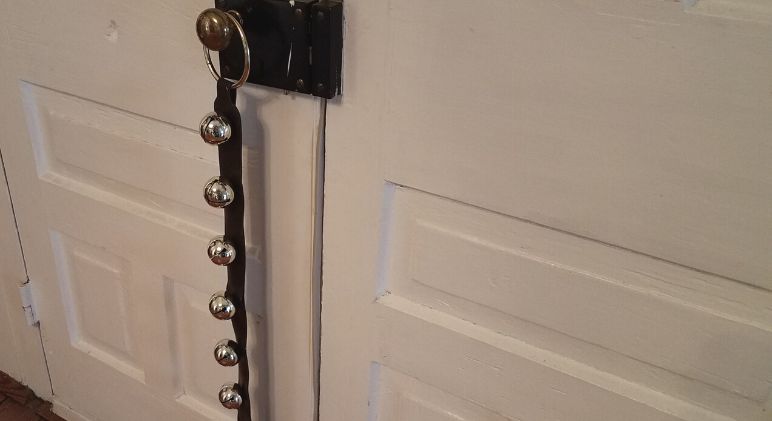
A potty bell is exactly what it sounds like: It’s a string of bells you place on your doorknob, which your pup rings whenever they need to go out. It’s a way some pet parents teach their dogs to clearly communicate bathroom needs.
An Important Note on Bells
While there are some big benefits to bell training, there is one main drawback.
Oftentimes, pet parents get a little too reliant on potty bells. I cannot stress enough, you mustn’t rely solely on the bell.
When potty training, you’ll still want to create and stick to a daily schedule. One where your pup goes out first thing in the morning, after meals, immediately after naps, and several times in between. (I outline a new puppy schedule in my book, Becoming a Dog Mom: The Ultimate Guide for New Puppy Parents) You’ll also want to watch for physical cues, such as pacing and sniffing the ground.
Potty bells are a great addition to your set schedule and ideal for dogs who already have a basic understanding of potty training (AKA they know their toilet is outside).
Steps to Potty Bell Success
- Step 1: Familiarize your dog with the bells. Since many dogs get startled by unknown loud sounds, try to keep the bells still for this first introduction. Either placing the bells on the ground or holding them still in your hands, slowly show them to your pup. Give your dog time to sniff and explore. And don’t forget: Offer your pup verbal praise and a tasty reward after a positive interaction.
- Step 2: Lightly jingle the bells, getting your pup familiar with the sound. Again, reward with verbal praise and yummy treats for positive interactions.
- Step 3: Once your pup seems comfortable with the sight and sound of the bells, hang them on the doorknob (of the door you use for potty breaks) and work on the Touch command. With a treat in your hand, slowly bring it near the bell and say “Touch.” As your dog’s nose touches the bell, immediately give a verbal success marker (like “Yes!) and offer the treat. Repeat this 10-15 times, or until your dog consistently touches the bell every time you say, “Touch.”
- Step 4: Next, you’ll connect their bell-ringing action to you opening the door. This looks like Step 3, but, instead of rewarding your dog with a yummy treat, the reward is getting to go outside.
Note: Some dogs end up ringing the bell just to go outside and play, rather than when they need to relieve themselves. Here’s how to help avoid this from happening: When it comes to bell training, you have to be disciplined about them going out, going to the bathroom, and then heading straight back inside. If your pup begins to connect the bell to outdoor playtime, he’ll start ringing that 24/7! Stay consistent and have patience – every dog learns at their own speed.