
Have you ever heard of Leaky Gut Syndrome? I was first introduced to the term about eight years ago when I worked as a writer and social media manager for a probiotics company. Their focus: Improving gut health. While that company was for people (not pups), dogs can also suffer from Leaky Gut Syndrome.
What is Leaky Gut Syndrome?
When your dog eats a yummy meal, food travels down the esophagus, into the stomach, and through the intestines. While on this journey, food is broken down in a process called digestion. During digestion, certain substances (like beneficial vitamins, minerals, and nutrients) are absorbed by the intestines and permitted to enter the bloodstream. The remaining waste is eliminated from the body.
Now let’s zoom in to take an even closer look at what goes on inside your dog’s body …
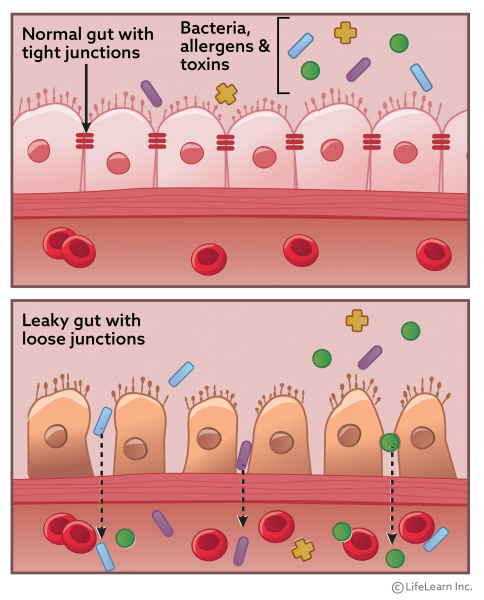
The lining of your dog’s digestive tract (AKA the mucosal lining) acts as a barrier to keep harmful bacteria, toxins, and undigested food particles from passing through the intestines into the bloodstream. This lining contains teeny tiny holes that typically only allow small, digested food particles to pass.
In dogs with leaky gut, though, the lining becomes inflamed and those holes widen. This compromises the barrier function of the intestines. So, along with the good nutrients, this allows harmful substances to literally “leak” into the bloodstream.
Here’s a visual:
The Impact on Your Pooch
Just like with people, many pets who suffer from leaky gut syndrome experience digestive issues: stinky gas, soft stools, vomiting, weight loss, etc. But, the impact of poor gut health goes far beyond digestion.
When undigested food particles and toxins escape the intestines and enter the bloodstream, the immune system views the foreign protein matter as an invader. The body works overtime to fight, ultimately leading to inflammation.
According to Dogs Naturally Magazine:
“The chronic inflammation caused by leaky gut is the driver of most chronic diseases. Dementia, autoimmune disease, heart disease, diabetes, arthritis, liver disease, cancer, inflammatory bowel diseases, allergies … they can all be caused by leaky gut.”
Symptoms
- Gas, diarrhea, and other gastrointestinal issues
- Food intolerance
- Autoimmune disease
- Joint pain
- Itchy skin
- Fatigue
What Causes Leaky Gut Syndrome in Dogs?
- Processed diets
- Over-vaccination
- Long-term antibiotic use
- Steroids
- Other medications (including heartworm, flea, and tick preventatives)
- Stress/anxiety
- Candida or yeast overgrowth
- Age (As our canine companions get older, the number and diversity of their gut bacteria declines)
How is Leaky Gut Syndrome Diagnosed?
According to VCA Animal Hospitals: “Leaky gut syndrome is not a medical diagnosis that can be proven or disproven. Instead, it is a potential effect of a number of different underlying intestinal diseases. Therefore, your veterinarian will perform tests designed to diagnose the underlying disease.”
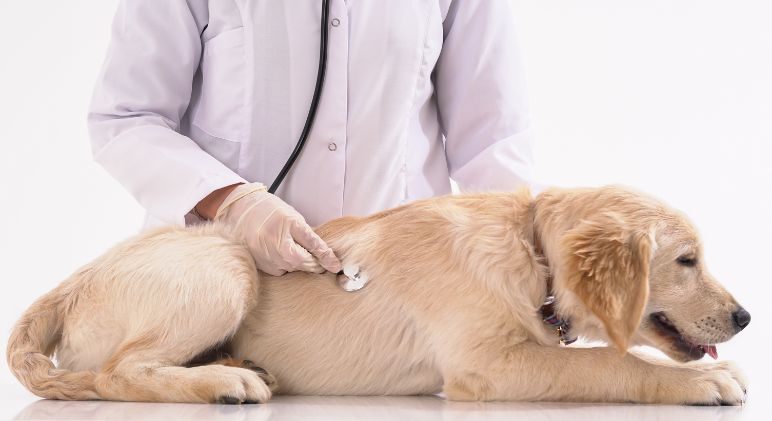
Along with a physical examination, your vet will collect a stool sample and perform bloodwork. Your vet may perform additional tests, like an ultrasound.
Treatment/Prevention Tips
When treating a leaky gut, the goal is to decrease intestinal inflammation to restore the barrier function of the intestines. The following tips can help to target varying underlying causes.
- Remove all dietary allergens from your dog’s diet.
- Ditch overly-processed dog foods and switch to a more species-appropriate diet filled with fresh proteins.
- Ditch store-bought treats filled with red-flag preservatives and questionable ingredients. See a list of homemade treat recipes HERE.
- Add a quality probiotic supplement to your dog’s daily routine to help restore good gut bacteria. THIS is the supplement I give my dogs. You can also work probiotic-rich whole foods into your dog’s diet, such as bone broth, kefir, and goat milk.
- Just like we need healthy foods to survive, so do probiotics. In order for that good bacteria to thrive, they need to eat prebiotics. Add prebiotic foods, such as oats and apples, to your pup’s diet.
- Talk to your vet about other natural herbs and supplements to help repair intestinal damage. Digestive enzymes, L-Glutamine, slippery elm, ginger root, and turmeric are all dog-friendly and reportedly great for the gut.
- Instead of booster vaccines, ask your vet to perform a titer test. This is a blood test to determine if your dog still has sufficient antibodies to protect against parvo, distemper, etc. This helps to avoid unnecessary over-vaccination.
- Talk to your doctor about any medications your pup is on, and ask about natural alternatives.
- Limit stress. Yup, our dogs can experience stress and anxiety too! See 7 ways to naturally calm an anxious dog HERE.