
Have you ever taken your pup to the beach? It’s one of our favorite warm-weather activities. There’s something so special about watching a carefree canine running along the shore, dipping their paws into the ocean, and digging in the sand. It’s pure joy! However, a beautiful beach day can quickly turn ugly if you’re not aware of a potential health hazard called sand impaction.
What is Sand Impaction?
Sand impaction is a potentially life-threatening condition that occurs when dogs ingest excessive amounts of sand. Once those tiny sand particles get into your pup’s mouth and begin traveling down into the intestines, they become wet, heavy, and compact. Ultimately, this collection of wet sand forms into a solid lump, and, if there’s enough, it can block the entire intestinal tract.
Okay … I know what you’re thinking: “I’ve never seen my dog chow down on sand, so this won’t happen to my dog!” But, since dogs explore the world with their mouths, accidental ingestion can happen in many ways. For example:
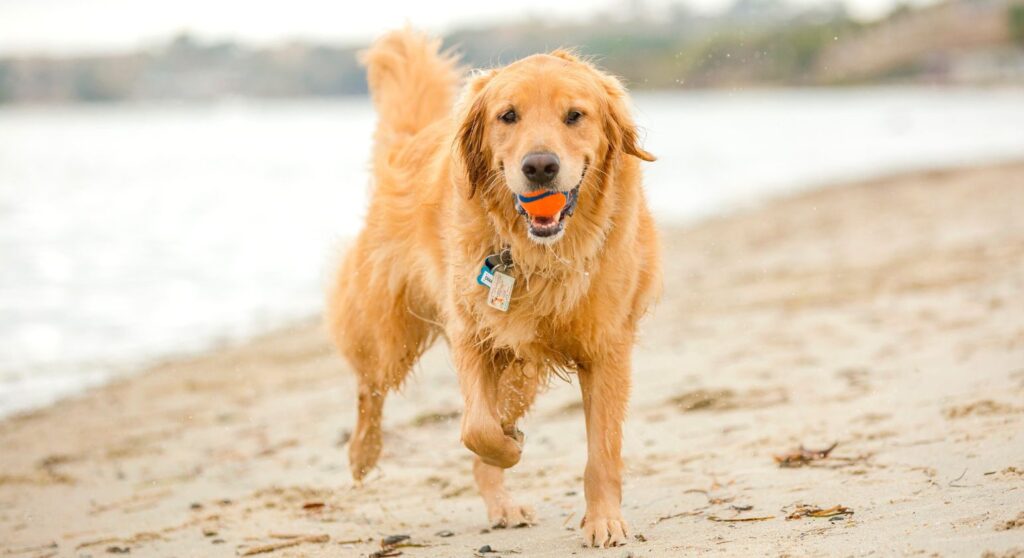
- Playing with sandy toys. Just think about it: When preparing for a beach day, have you ever packed your pup’s tennis ball to play a game of Fetch? Every time you throw that ball, it lands on the ground and collects more sand. Then your dog reaches for it with their mouth, ultimately swallowing some.
- Digging. When your dog digs a hole to lie in, they will likely get sand in their face and mouth.
- Grooming. Licking the sand off of their paws and body.
- Puppy Picnic: If you bring treats – or your dog’s food – to the beach, make sure it doesn’t drop in the sand before your pup digs in. In some cases, dogs may accidentally consume sand if their food or treats become contaminated with it.
- Water. Accidentally gulping down salty, sandy water.
It’s worth noting: Small quantities of sand may not pose an immediate threat. However, repeated ingestion or consuming a significant amount of sand can lead to various health complications.
Symptoms & Treatment
Once ingested, sand can accumulate in the dog’s stomach and intestines. If you notice your dog experiencing any of these symptoms while at the beach – or after a day at the shore – call your veterinarian ASAP.
- Signs of abdominal discomfort or pain
- Abdominal distension
- Hard mass in the stomach area
- Restlessness
- Loss of appetite
- Dehydration
- Panting
- Vomiting
- Straining to defecate
Again, if you suspect your dog has ingested a significant amount of sand or is showing any signs of sand impaction, it is crucial to consult a veterinarian. They will conduct a thorough examination, including an ultrasound and/or X-rays to evaluate the extent of the problem. From there, your vet will recommend the appropriate treatment.
In mild cases, dogs will likely receive pain medication and IV fluids to help pass the lump of sand. In extreme cases, though, surgery may be necessary to remove the sand from the intestinal tract.
Prevention and Safety Measures
- Supervision: Always keep a close eye on your dog while playing at the beach. Monitor their activities, especially if they have a habit of digging or mouthing objects. This will allow you to intervene and discourage excessive sand consumption.
- Choose Toys Wisely: If you plan to take toys for your dog, opt for something non-absorbent, such as a plastic Frisbee. Additionally, rinse toys frequently with fresh water during play.
- Provide Fresh Water: Offer your dog plenty of fresh water to drink during their beach outings. This will help keep them hydrated and reduce the chances of them drinking salty ocean water.
- Training and Commands: Train your dog with basic obedience commands like “leave it” or “drop it.” This will help you control their behavior and prevent them from ingesting harmful substances, including sand.
Other Hazards to Watch For
- Hot Sand – Always do a temperature check to ensure the sand isn’t too hot for your dog’s paws.
- Heatstroke – Excessive heat, limited shade, and inadequate hydration can quickly lead to heatstroke, a life-threatening condition. Signs of heatstroke in dogs include excessive panting, drooling, weakness, rapid heartbeat, and collapse. Always provide shade, fresh water, and regular breaks in cooler areas to prevent heatstroke.
- Sunburn – Just like humans, dogs can suffer from sunburns when exposed to prolonged sun exposure. Light-colored and thinly coated dogs, as well as areas with little fur such as the belly or nose, are more vulnerable. Provide shade and look into pet-safe sunscreens.
- Strong Currents – When swimming at the beach, be cautious of strong currents and undertows. These can pose a significant danger to both you and your dog.
- Jellyfish – According to the Pet Poison Helpline, “It is best to keep your dog away from jellyfish if you see them in the water. If your dog does come in contact, immediate Veterinary attention is necessary. This can cause acute respiratory distress, dry eyes, urinary retention, cyanosis, and cardiac arrest is possible. Ingestion of dead jellyfish will likely cause vomiting.”