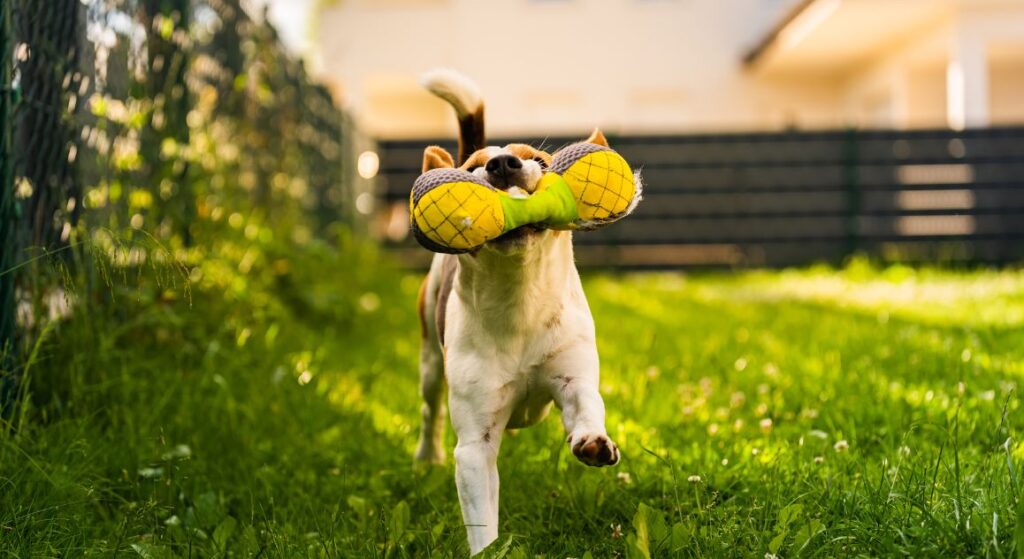
I bought my first house in 2018. I still remember handing over the earnest money deposit and then telling my two dogs, “I bought you a house!” Sure, I was excited about the extra space, no shared walls, and freedom to decorate. But one of my main goals was: Provide my dogs with a backyard to run off-leash and enjoy! Can you relate? Here are six tips to ensure you create a dog-safe backyard … one that’s secure and fun for your precious pup!
1. Install Fencing
The first step in creating a dog-safe backyard is to install a fence. When picking out the type, consider more than aesthetics. For example, with two tiny dogs, we immediately opted for a white vinyl privacy fence. This was the most functional for us. Since then, though, we sold our house and moved to a new one … and the previous owners had already installed a black wrought iron fence. Since my dogs can fit through the gaps, we had to wrap the bottom with a mesh barrier. If you have small dogs and purchased a home that already has a fence with gaps, look into fencer wire, puppy pickets, or a puppy bumper.
Routinely Inspect Your Fence
Once installed, make sure to regularly inspect your fence for any loose boards or gaps that your dog could squeeze through. Along with each board, check the perimeter of the fence for any gaps or openings at the ground level. Small to medium dogs might be able to slip right under and out. For larger dogs and diggers, with a little work…they can be out too! Plus, monitor the gate latches and locks. Does a little shaking cause the gate to swing open? If so, check, adjust, and repair any locks, screws, or latches in question.
Pool Fencing
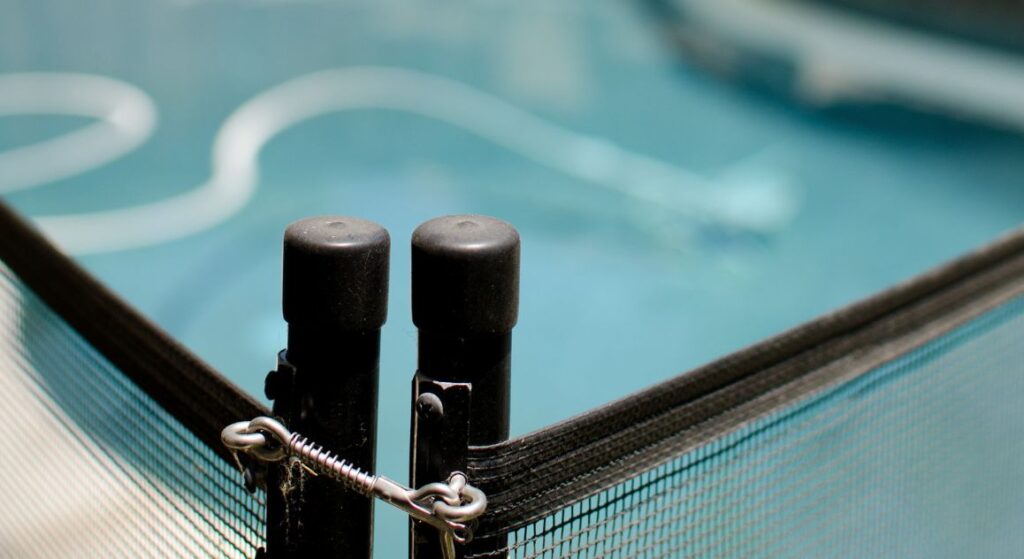
It’s pretty obvious why installing a fence around your property line is beneficial for anyone with dogs. But, if you have a pool then consider adding a second fence. Dogs are naturally curious and may be drawn to the water, putting themselves at risk of accidentally falling in and/or drowning. Pool fences help to prevent a potentially deadly situation.
2. Keep The Grass Short
Keeping your grass short is essential when you have dogs, as it helps minimize the presence of snakes and bugs in your backyard. Snakes and insects, such as ticks and fleas, are attracted to long grass as it provides them with ample hiding spots and protection. By regularly mowing your lawn to keep it short, you reduce the potential hiding places for these unwanted critters, decreasing the risk of encounters or infestations.
If you’re in the market for a new mower, look into the battery-powered self-propel EGO Power+ – this is the one we have, and couldn’t be happier.
3. Routinely Inspect and Treat for Critters and Pests
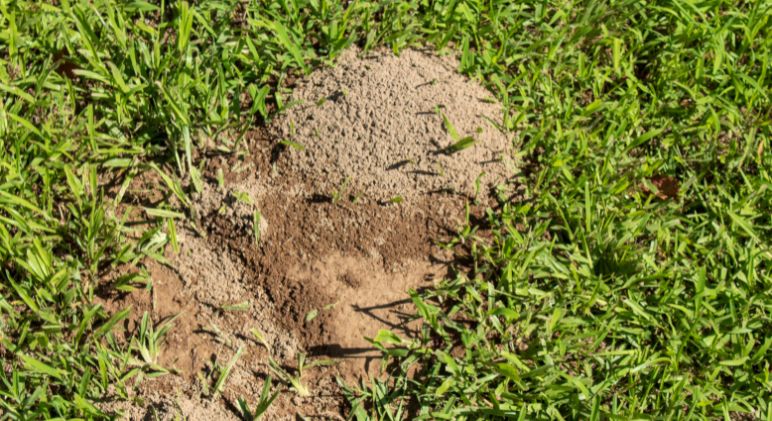
Despite your best efforts, unwanted critters and pests can appear in your yard anytime. So, get in the routine of regularly scanning all areas of your backyard. Be on the lookout for hazards like fire ants. In addition to minor skin irritations, one too many fire ant stings can lead to potentially life-threatening toxicity. Fire ants work together to build nests, which look like large dirt mounds. If you look closely, you’ll see a colony of ants marching around. Get this: The average colony contains 100,000 to 500,000 worker ants. Fire ants usually build their nests near an object: sidewalk edges/cracks, patio edges, houses, or trees/bushes. But, you may also find their dirt-pile homes smack dab in the middle of your backyard. If curious Fido sniffs, stands in, or digs into a mound of aggressive fire ants, you can expect them to attack in swarms, latching onto your dog’s skin and stinging them repeatedly. Ouch! Find out more about fire ants HERE.
4. Choose Dog-Friendly Landscaping
When selecting decorative flowers, shrubs, and plants for your backyard, research and opt for dog-friendly options. If you’re into gardening, be mindful of which crops you’re growing. Remember, certain foods (such as onions) are toxic to dogs. No matter what you’re harvesting, consider creating a designated area for your plants and use barriers or raised beds to prevent your dog from digging or accessing them. Additionally, regularly check for any poisonous plants that may have sprouted unexpectedly, and promptly remove them to eliminate any potential risks.

5. Provide Shade and Hydration
During the hot summer months, dogs can easily overheat. When hanging out in the backyard with your pup, make sure they have access to a shaded spot. Look into raised canopy dog beds, like THIS one. Or, install a large umbrella with room for your dog to relax under.
Along with shade, set out a bowl of fresh water for your dog to stay hydrated. Please note: It’s important to bring your dog’s water bowl inside for a thorough cleaning after each play session in the backyard. Stagnant water can quickly become a breeding ground for bacteria, posing health risks to your furry family member. Additionally, dog bowls can easily harbor dangerous germs, even if they appear clean.
6. Build an Enrichment Area
A dog-safe backyard should offer more than just a secure space for your pup to roam. It should also provide opportunities for physical exercise and mental stimulation. If you have enough space in your backyard, consider designating one area for doggy enrichment activities. Some ideas:
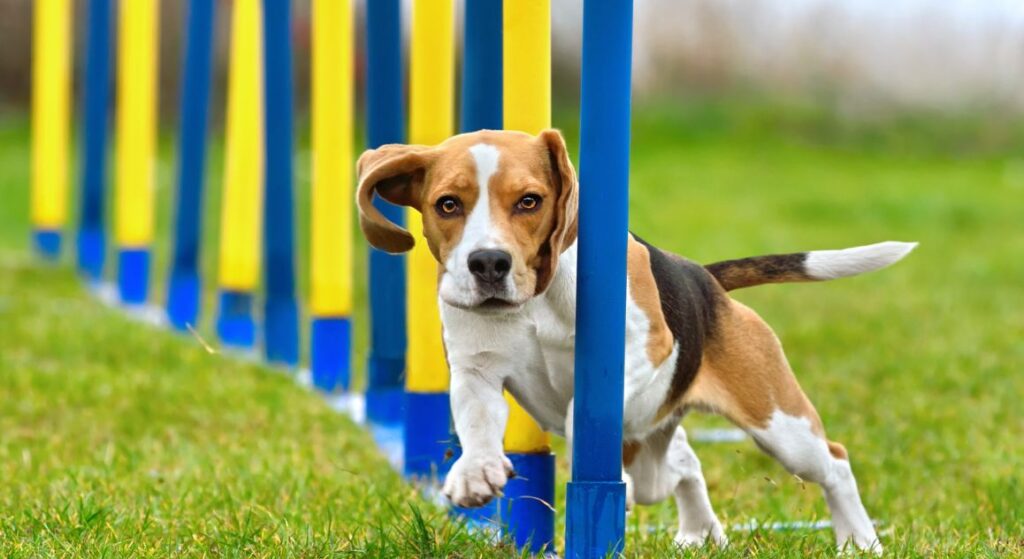
- Home agility course, featuring tunnels and weave polls. If you search for dog agility courses on Amazon, you’ll find plenty of options. Some are affordable while others are quite pricy, depending on how serious you are about agility!
- Splash pad, for the pups who enjoy running through sprinklers. This is a great one for summer!
- Auto ball thrower, like the iFetch.
- A kiddie pool filled with sand to create a fun digging zone.
- Dog tug toy, which you attach to a tree. These are great for larger, high-energy dogs!
Bonus Tip: Always Supervise Your Pup
Even with the most well-designed backyard, it’s essential to supervise your dog whenever they’re outside. Keep an eye on them to ensure they don’t get into any trouble or encounter any unexpected hazards. If you have a pool or pond in your backyard, never leave your dog unattended near the water, as even the strongest swimmers can get into trouble. Always be present to intervene if necessary and to provide guidance and supervision as your dog explores and enjoys their outdoor space.
Creating a dog-safe backyard requires careful planning, attention to detail, and a commitment to your furry friend’s safety and well-being. By following these six essential tips, you can design a backyard haven where your dog can play, relax, and thrive!