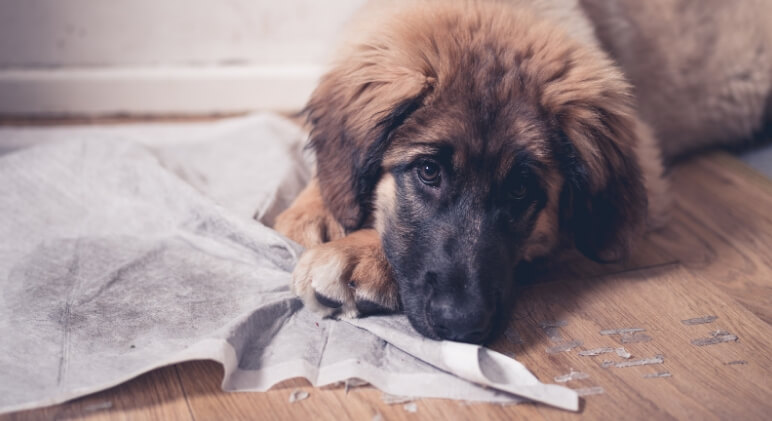
Throughout my years of potty training dogs, I’ve used pee pads a few times. But, I must admit, I wouldn’t use them again. Sure, they’re beneficial at times. They’re great for unvaccinated puppies living in busy apartment complexes, small breeds during harsh winter months, and elderly/disabled pooches who have trouble walking. However, for the average dog mom, I’m not a believer in training pee pads. Think about it – pee pads teach your furbaby that it’s okay to go to the bathroom in the house. That’s the total opposite of what you are trying to teach them. So, unless you plan to use pee pads for the rest of your dog’s life then they’re simply adding an extra step to the training process.
If your furbaby is already trained to pee pads when you bring him home, and you intend on moving his potty to the backyard, your job is to re-train.
The Tricky Part
At first, your puppy isn’t going to understand why you’re moving his bathroom from the pee pad to outside. Think of it from his point of view. When your pooch is used to going on a pee pad in the house, he never has to exert any real control. He gets the urge to go, walks over to the pad, and relieves himself. So now, not only do you want to change where he goes, you also want him to hold his urges until you get him there.
For you: “Yay, no more pee pads.”
For him: “What the heck?!”
You can’t just take the pee pad away or else your furbaby will likely just run to that same spot and tinkle on the floor. With that in mind, the pee pad will become your best training tool.
Step 1: Move the Pad Closer to the Door
The goal here is to move your dog’s potty closer to outside. Don’t rush this process. You’re going to have to move the pad slowly until you get to the door. This process could take up to two weeks, depending on where you usually keep the pee pad. If you try to move it too quickly, you increase the chance of accidents.
Another tip: Every time you move your puppy’s pad, let him watch. Then, once your puppy uses the pad in its new spot, offer lots of praise. Praise works wonders because your furbaby thrives when he pleases you.

Step 2: Move Your Dog Outside
Once the pee pad is right next to the door, the next step is to finally move outside. Whenever you see your puppy run over to the pee pad to relieve himself, quickly grab his leash and ask if he wants to go Out. Then, bring him outside to do his business.
For some dogs, it also helps to bring the pee pad outside. Before you know it, your puppy should be going over to the door and asking to go out.

More Tips
Disinfect
When you move the pee pad, thoroughly disinfect the floor. This is very important since you don’t want to leave any scents behind to attract your dog. You’ll want to use a bio-enzymatic formula to break down and permanently destroy urine and fecal odors. There are many brands available online or at your local pet store. Here are some of my favorites:

Remove Throw Rugs and Floor Mats
If you have throw rugs around your house or floor mats by your doors, remove them during the training period. At this time, your pooch may see these rugs as replacement pads and go on them. I say this from experience because I had a dog who did this. I removed the throw rug and she was fine. After she acclimated to her outdoor potty, I was able to return the rug.

Accidents
If your pooch has an accident and you catch him in the act, clap your hands loudly to alert him that he’s doing something wrong. Then, immediately take him outside.
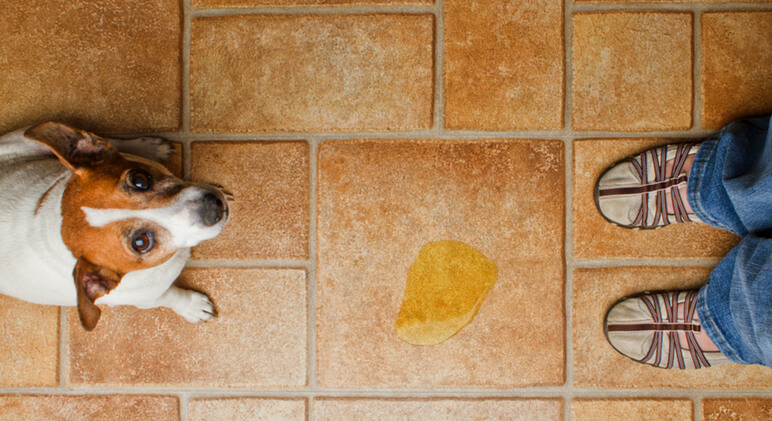
If you discover an accident on your floor but didn’t catch your dog in the act, simply clean it up and try keeping a closer eye on him next time. Don’t get angry or rub your dog’s nose in it. Puppies aren’t able to connect your anger with their earlier accident.
Go Outside for a Walk
If you notice your pooch sniffing, walking in circles, or giving cues that he needs to go, either place him on the pad at the new location or – if possible – take him out for a walk. When he goes, give lots of praise and a treat is always a good idea. Make a big deal about it!

Crate Train
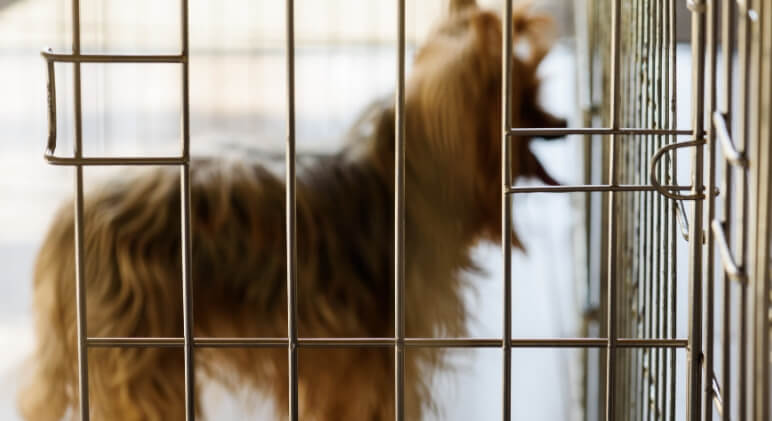
Crates offer a lot of benefits, and speeding up the potty training process is just one of them. Using the crate whenever you can’t keep an eye on Fido will help cut back on accidents around the house. The fewer accidents, the better.
When choosing a crate, getting the proper size is essential. Always make sure the dog has enough room to stand up, turn around, and move comfortably. However, you don’t want the crate to be so large that your pooch can go the bathroom on one side and take a nap on the other. Dogs don’t like to sleep where they go to the bathroom, so crate size is important.
Good luck!