
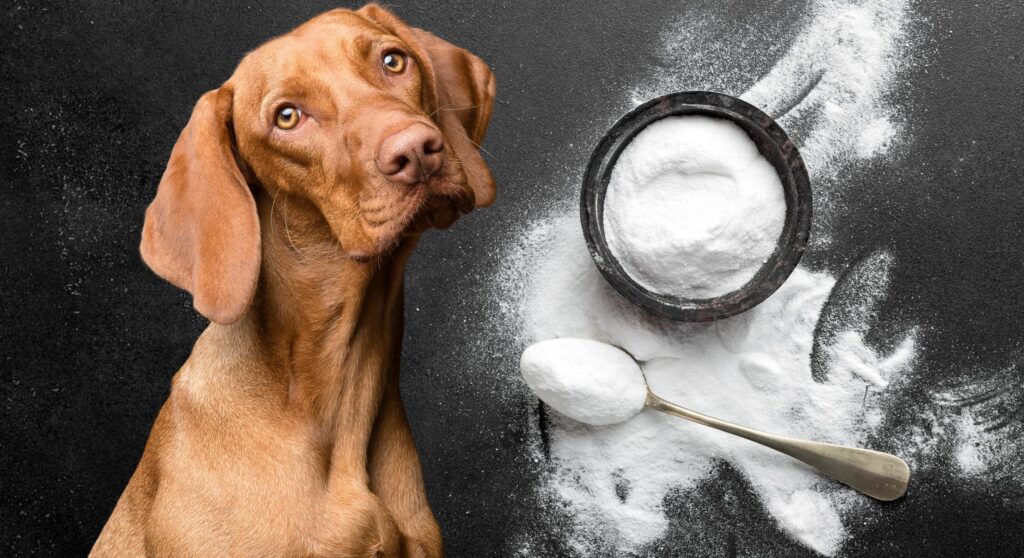
If you open up your pantry right now, would you spot a box of baking soda? With so many amazing uses, chances are, the answer is yes! Baking soda, also known as sodium bicarbonate, is most commonly used as a leavening agent in baked goods. It’s also great for a variety of other household uses, such as cleaning and deodorizing. For homes with pets, baking soda can be used to help clean up potty accidents, clean toys, de-skunk a stinky dog, relieve pain caused by a bee sting, and even stop bleeding if you accidentally trim your dog’s nails too short. (Read more about the many ways you can use baking soda in a dog-friendly home HERE). While it’s clear baking soda has a place in pet-filled homes, today we’re answering the question: Is it considered toxic to dogs if consumed?
Is Baking Soda Safe for Dogs?
While one or two accidental licks are unlikely to do any harm, baking soda (in its raw state … right from the box) can cause some serious problems for your canine companion when consumed in large amounts.
Here’s the thing: Baking soda makes an excellent leavening agent because it expands when exposed to heat and an acidic substance. While that effect is desirable when popping cake batter into the oven, it’s quite the opposite if you replace that oven with your dog’s stomach. Once combined with your dog’s stomach acid, baking soda can release potentially deadly gases into their gut.
Additionally, when ingested in large amounts, baking soda can disrupt the delicate balance of electrolytes in your dog’s body. It can cause an increase in the sodium ion concentration in the bloodstream, leading to hypernatremia (AKA high sodium levels).
If your dog eats too much baking soda, they may experience the following symptoms:
- Abdominal pain
- Vomiting (This is often the first symptom)
- Diarrhea
- Lethargy
- Shortness of breath
- Disorientation
- Irregular heart rate
- Congestive heart failure
- Seizures

How Much is Too Much?
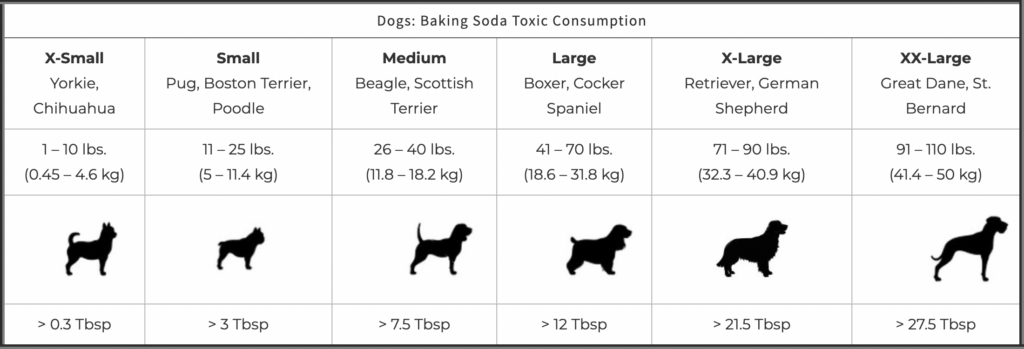
So, how much baking soda is too much? Well, that depends on your dog’s size and weight. While pet parents are urged to monitor their pups – and consult with their veterinarians – after consuming any amount of baking soda, here is a toxicity chart from Vetmeds.org.
What to Do If Your Dog Eats Baking Soda
Whether your dog has consumed a small or large amount of baking soda, alert your veterinarian. If your vet’s office is closed, either call a local emergency veterinary hospital or the Pet Poison Helpline (855-764-7661). The Pet Poison Helpline is available 24/7. A $75 incident fee applies.
Depending on the amount of baking soda ingested, your veterinarian may recommend inducing vomiting. They may also administer activated charcoal, which helps prevent the compound from being absorbed into your dog’s body. Your vet may also want to perform additional treatments, such as IV fluids and/or medications.
Important Notes …
- Do NOT induce vomiting unless instructed by your veterinarian.
- Make sure your dog has access to plenty of fresh drinking water.
- Monitor your dog’s behavior closely.

What About Baking Soda in Dog Treats?
I personally don’t use baking soda in my homemade dog treat recipes because I find it unnecessary. However, the cooking process changes the chemical structure and baking soda’s expanding properties are no longer a concern. Plus, the small amount of baking soda used in a batch of Pupcakes is nothing to worry about.
What About Baking Powder?
The focus of this article is on baking soda. Another common household item you may have in your pantry is baking powder, which is a combination of baking soda, calcium phosphate, and sodium aluminum sulfate. Just like baking soda, baking powder is dangerous to dogs when consumed in large quantities.
Both baking soda and baking powder should be stored in a closed pantry or cabinet – somewhere you’re dog can’t reach/access.