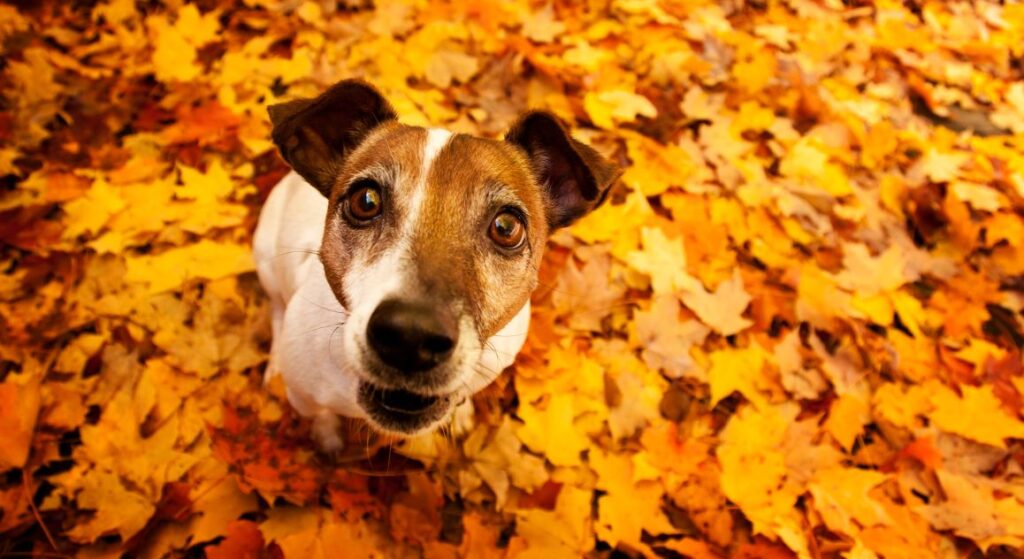
Fall is a beautiful time of year! As the temperature drops, tree leaves turn brilliant shades of red, orange, and yellow. The picturesque landscape certainly calls for some outdoor adventures … and there’s no better sightseeing partner than your dog! While it’s fun for our canine companions to tag along during Fall foliage hikes and spend time with us in the backyard, there’s one thing to watch out for: Leaf piles. I know that sounds silly, but, in this article, we’ll explore the hidden dangers that can lurk within these leafy playgrounds. Plus, tips to keep your canine companion safe!
Fleas and Ticks: Silent Stowaways
While fleas and ticks are a threat to pets year-round, they’re most active in the early spring, summer, and fall. They’re notorious for hiding in the grass. But, once the leaves start falling, they can also find a cozy refuge in leaf piles. They’ll nestle in while patiently waiting for a host to jump onto … to live and reproduce. Fido’s warm, furry body can be an inviting place for a flea or tick to call home.
The danger of ticks: These parasites thrive by attaching themselves to a host (like you or your dog) to feast on blood. It’s during this blood meal that an infected tick has the potential to transmit an assortment of bacterial, protozoan, and viral pathogens – some of which can be deadly. In this article, we share 6 diseases ticks can pass along to your dog.
The danger of fleas: Fleas also feed off of your dog’s blood. Adult fleas can consume as much as 15 times their own weight in blood each day. If fleas suck too much of your dog’s blood, your pooch can develop anemia. Additionally, when a flea bites, it will deposit a small amount of saliva under the skin. Some pets actually develop an allergy to this saliva. This can result in severe itching and skin irritation. Plus, your dog could become infected with tapeworms if he/she ingests an infected flea. Along with intense itching around the anus, you may be able to see the tapeworms around your dog’s anus or in his/her feces.
After outdoor time, take a moment to check your dog for these unwelcome hitchhikers. If you spot any, get them off immediately.
Hidden Bacteria, Fungi, Molds, and Parasites
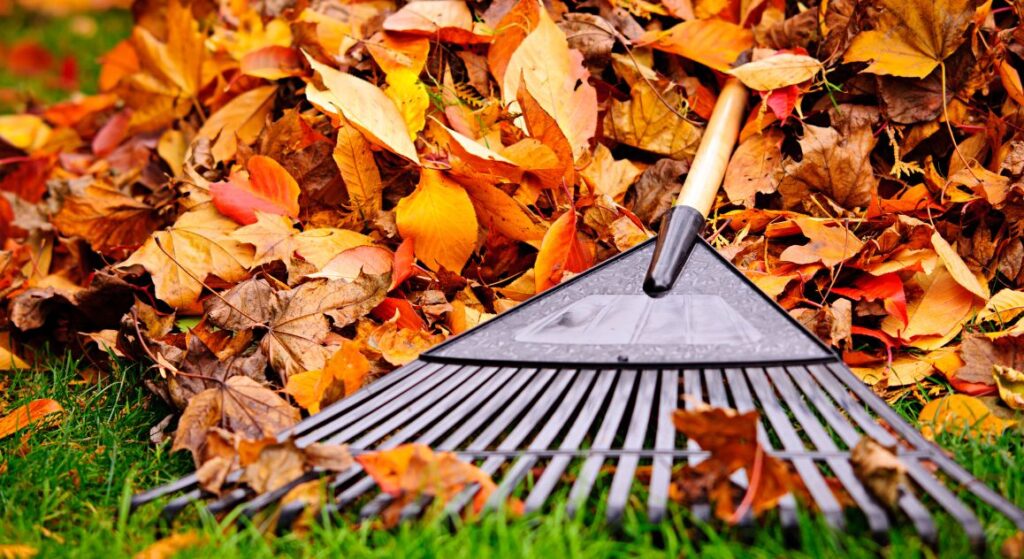
Bacteria, fungi, molds, and parasites can be lurking in and beneath the fallen and decaying leaves. Dogs are notorious for putting things in their mouths, and leaves are no exception. Ingesting contaminated leaves can lead to gastrointestinal issues and other health problems. When playing around leaves, make sure to watch your pooch and discourage them from licking or nibbling them.
Slithering Snakes
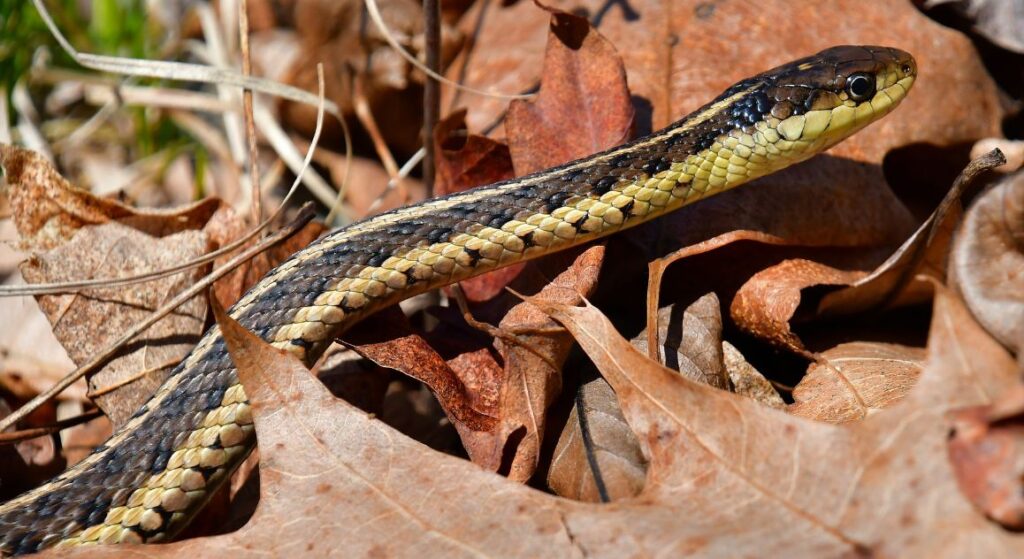
Snakes are masters at camouflage and always like a good hiding spot. Be mindful of leaf piles – both in your backyard and also found on hiking trails – as they could be home to a slithering snake. It’s crucial to be aware of what snake species inhabit your local area and stay vigilant. While some snakes are harmless, others can pose a threat to your dog. If you live in an area with venomous snakes, like rattlesnakes or copperheads, exercise extra caution. In this article, we share 12 tips to help protect your pooch from snakes.
Spiders
Spiders are another hidden hazard that could be lurking beneath your backyard leaf pile. Consider it a hunting ground where they can find other insects to eat. Make sure you know which spiders are local to your area. I happen to live in the southeastern United States where Black Widows and Brown Recluse spiders like to call home. So I’m always on the lookout. Find out more about the dangers of certain spiders in our article HERE.