If you could speak to a veterinarian right now and pick their brain about any dog health-related topic, what would you ask? I recently asked my Proud Dog Mom readers this question and so many of you came back asking about hot spots. So, during an interview with Ashley Gray, DVM – a veterinarian here in the Charlotte, NC area – she shared more about what they are, what triggers them, treatment plans, and prevention tips. Here is a detailed overview of what she shared with me.
What Are Hot Spots On Dogs?
A hot spot (also known as acute moist dermatitis) is an inflamed and infected area of your dog’s skin that appears red, raw, moist, and oozing. Dogs may also experience hair loss around a hot spot, as a result of licking, rubbing, and biting at the area. These itchy and painful sores can appear quickly and worsen rapidly. While hot spots are incredibly frustrating for your dog to deal with, there is some good news: They can be treated and even prevented!
What Triggers Hot Spots?
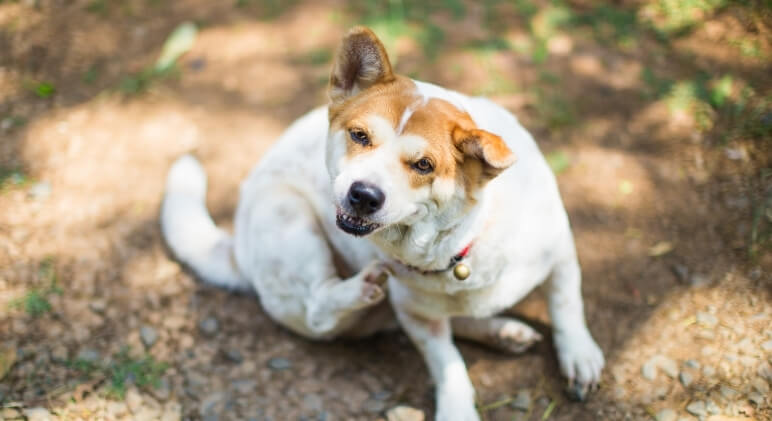
Hot spots are a secondary infection that can be triggered by just about anything that causes your dog to obsessively scratch, lick, or bite at an area of their skin. This includes:
- Environmental/seasonal allergies
- Flea allergy dermatitis
- Food allergies
- Ear infection
- Parasites
- Anal sac disease
- Wet/dirty skin: Moisture trapped in the coat from swimming
Just think about it …
When your dog feels itchy, what does he do? Chances are, he fixates on the area. He likely scratches, licks, and bites away in hopes of getting some relief. But, instead of making things better, the itchy area just gets more irritated and inflamed. Once the skin is ripped raw, it’s primed for infection and sets the stage for even more scratching, skin injury, and hot spots. It’s a vicious cycle.

Are Certain Dogs More Susceptible To Hot Spots?
While any dog can develop a hot spot, they’re most commonly seen in dogs who suffer from allergies. Additionally, they can become an issue for breeds with thick coats (especially if they’re frequently wet from swimming or bathing). Hot spots are also more likely to occur during the hot summer months and periods of high humidity.
Treatment
If you suspect your dog has a hot spot, it may be tempting to wait it out and see if it goes away on its own. However, since hot spots can spread and worsen quickly, you’ll want to take immediate action. According to Dr. Ashley Gray, you can treat small/mild hot spots at home. But, if your dog is suffering from severe irritation (where the hot spot has an odor and is causing your dog a lot of pain) then schedule a visit with your vet immediately. Treatment will likely include:
Shave the Area
The hair on and around a hot spot can easily mat up and trap moisture near the wound. Since moisture is the perfect breeding ground for bacteria and can lead to a much larger problem, it’s important to shave the surrounding hair, get air to the area, and start drying out the hot spot.
If you feel comfortable using the clippers and the hot spot is pretty small/mild, you can do this step at home. But, please keep in mind that hot spots can become incredibly sensitive and painful for our dogs. So, some may need to be sedated and shaved by a vet.
Clean the Wound
It’s important to keep the area clean. So, gently disinfect the wound with a solution that will kill bacteria and help soothe the skin. Dr. Gray recommends Douxo Chlorhexidine Mousse, an over-the-counter, no-rinse formula that contains antibacterial, anti-inflammatory, antifungal, and moisturizing agents to help manage skin infections.
Topical Solution / Oral Antibiotics
Depending on the hot spot’s severity, your vet may recommend additional topical solutions and even prescribe oral antibiotics to treat secondary bacterial infections.
Protect The Wound
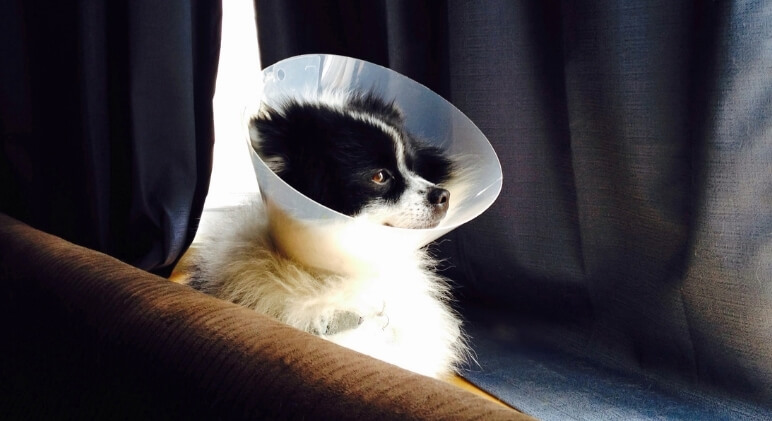
Along with the treatment tips above, make sure Fido doesn’t continue scratching, licking, and biting at the hot spot. This will just continue to traumatize the area. To keep the wound protected, your dog may need to sport the cone of shame or a cone collar alternative. Sorry, pup!
Prevention
To help your fur kid fully heal and prevent future hot spots from forming, it’s important to identify and treat the root cause.
- If your dog’s hot spots are caused by seasonal allergies then try:
- Limiting exposure to allergens
- Wipe your dog’s paws, underbelly, and face when they come in from a walk
- Make sure your pup is getting enough Omega 3s
- Introduce a quality probiotic supplement
- Introduce a quality CBD oil
- Keep a clean home
- Change air filters regularly
- Since flea allergy can also trigger hot spots, make sure to think about flea control (whether you are trying to go the natural route or using a monthly treatment).
- Hot spots on the neck may be the result of an ear infection. Always make sure to keep your pup’s ears dry and clean. Plus, if you do suspect an ear infection forming then get it treated sooner rather than later.
- Hot spots over the hip area may be the result of Anal Sac Disease. If you notice a fishy odor coming from your pup’s bottom and he’s scooting his butt across the floor then his anal glands may need to be expressed. Your vet can do this for you. In general, good nutrition can help prevent a dog’s anal sacs from becoming impacted in the first place. Adequate fiber creates bulk and promotes healthy stools, which in turn promotes natural anal sac excretion when your dog has a bowel movement. It’s important to note that soft or loose stools do not promote the emptying of the anal sacs. The key is making sure Fido has a healthy formed stool.
- Does your dog love to swim? Make sure to thoroughly dry his coat after a dip!