Have you ever heard of bloat and twisted stomach in dogs? It’s something all pet parents should be aware of, as it can happen without warning and quickly become life-threatening.
The medical term for Bloat is Gastric Dilatation, and for Twisted Stomach it’s Volvulus (GDV). Although many reference GDV and Bloat as the same thing, there are actually two events going on here … distention and twisting.
Let’s take a closer look …
What Is Bloat?
Bloat occurs when a dog’s stomach rapidly expands (Gastric Dilatation) due to large amounts of gas, food, or liquids. This causes pressure on the surrounding vital organs. Excessive pressure from the trapped gas can compromise abdominal blood vessels, decreasing blood flow back to the heart as well as other organs.
Bloated dogs can experience abdominal pain, shortness of breath, and decreased blood circulation.
If a dog can’t pass or rid the excess gas/air, Bloat can quickly escalate into a medical emergency and require an immediate trip to the vet.
What Is GDV?
Now let’s get to the V. The “V” in GDV stands for Volvulus, which is the term used when the stomach twists and folds down upon itself. This can occur after a dog bloats.
Volvulus (twisting) further complicates blood flow because, when a dog’s stomach twists and folds, it seals off entry and exit from the stomach. This obstructs all flow in and out, including gas, digestion, and blood flow back to the heart.
Without immediate veterinary intervention, GDV can quickly escalate into shock and death. The unfortunate part is, oftentimes, even with intervention, GDV can be deadly.
Why Do Dogs Get Bloat?
For decades, there have been numerous research studies done on the subject. But, there’s still no definitive answer. Here’s what they do know: Although it can happen to any breed, large/deep-chested breeds are the most prone.
Top Breeds Known To Suffer From Bloat/GDV
- Great Danes
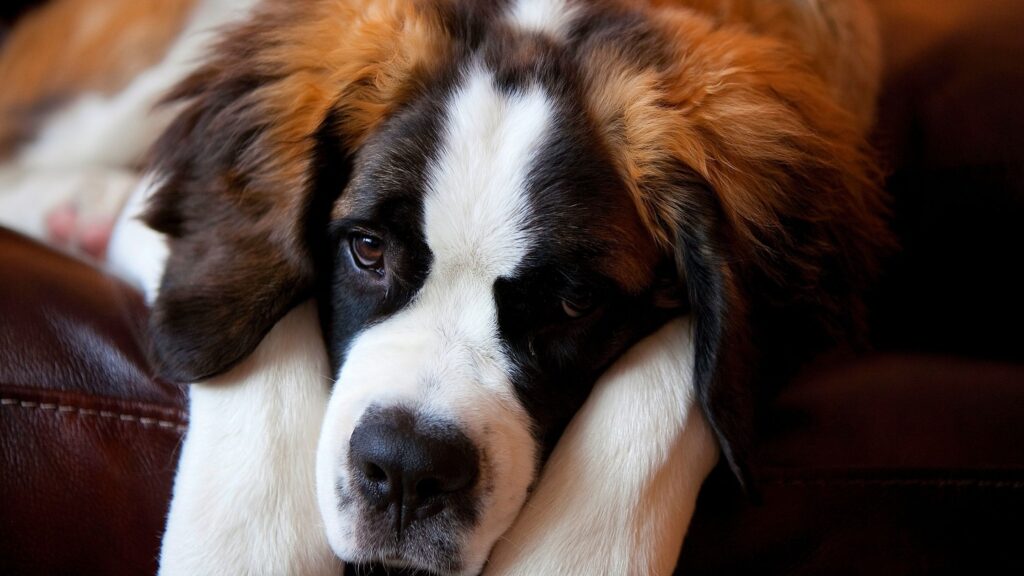
- Saint Bernard
- Weimaraner
- Standard Poodles
- Boxer
- Old English Sheepdogs
- Irish Setters
- Gorden Setters
- Basset Hounds
- Doberman Pinschers
- German Shorthaired Pointers
- German Shepherds
- Newfoundland
- Akita
- Mastiff
- Bullmastiff
*Remember: These are the most common breeds that suffer from this condition, but any breed can bloat.
Signs and Symtoms Of Bloat/GDV
- Distended, tight, and hard abdomen
- Restlessness – Fido just can’t get comfortable
- Dry heaving, or vomiting white foam
- Unable to (or struggling to) poop
- Unable to pass gas
- Drooling
- Shallow, rapid breathing
- Rapid Heart Rate
- Pale Gums
- Anxious
- Pacing
- Whining
- Weakness, which can quickly progress to collapse
Prevention And Risk Factors
No one can 100% prevent bloat/GDV from ever happening, but there are several things you can do to minimize Fido’s risk.
Slow Down the Speedy Eater
Don’t let Fido scarf down his meals. When your pooch woofs down a meal very quickly, along with his food, he’s also swallowing a lot of air … which winds up in his stomach. The excess air can make him more prone to bloating. There are a few ways you can slow your pup down, which I outline HERE. One tip: Use a slow feeder bowl! There are maze-like bowls on the market called slow feeders. These are designed to help slow down speedy eaters. The bowls are constructed so the dog has to work the food out of the various channels and compartments.
If you don’t want to buy a slow feeder then you can replicate the same basic idea with a muffin tin! Grab your muffin tin, spoon a little bit of your dog’s food into each individual cup, and then give it to your pooch. The need to move from cup to cup will help your pooch slow down.
Watch the “It’s mine!” Personality
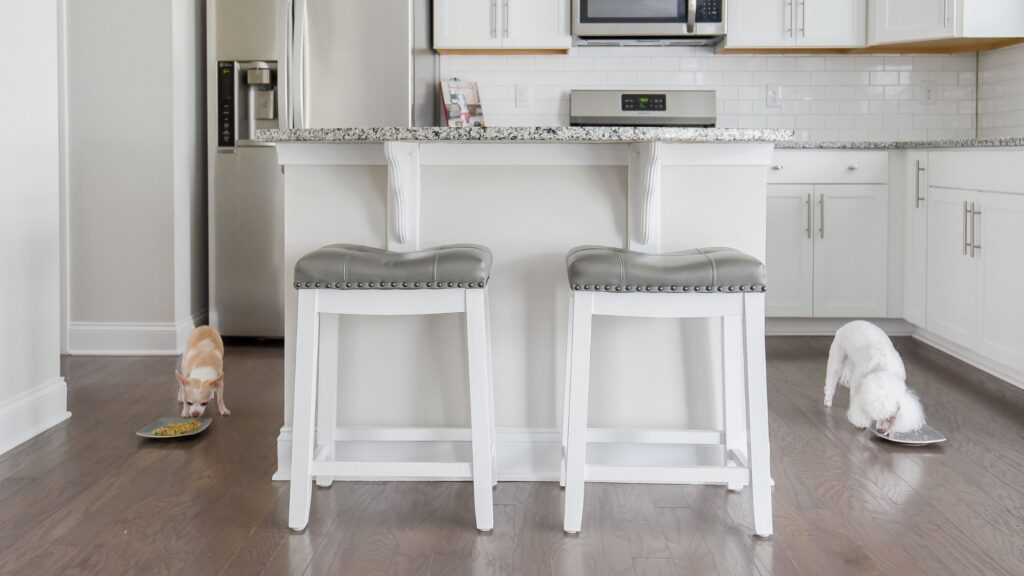
If your pup’s a competitive eater and you have other dogs at home – separate them during mealtime to decrease the competition. In my house, this is a common practice. My toy poodle Gigi is always in a race when my Chihuahua Diego is near – so I always serve my dogs their meals on opposite sides of the kitchen island. The AKC says, “Fast eaters have five times the risk than dogs that are slow eaters.”
Avoid Raised Food Bowls
There was a time when experts thought raised food bowls for giant and large dogs would drastically decrease a dog’s chance of getting bloat/GDV. But, many experts now say these bowls may actually increase the risk of a dog developing bloat. So, for now, it’s best to keep Fido’s dish on the floor.
Spread Meals Out
Feed Fido 2 to 3 meals a day. Smaller, more frequent meals decrease the risk of bloating. According to the AKC, “Dogs fed one meal a day are twice as likely to bloat as those fed two meals a day.”
Ditch the Dry Food Kibble
Dr. Karen Becker says, “The type of food you feed your pet can also be a contributor. The majority of kibble (dry food) on the market contains carbohydrates like corn, wheat, rice, soy and oatmeal. These carbs are highly fermentable, and fermentation produces gas. Fermentable carbohydrates can be considered a side effect of feeding your dog a non-species appropriate diet. Dogs don’t have a dietary carbohydrate requirement. The more carbs you feed to an animal with no requirement for them, the more gas they will produce.”
This is definitely something to think about!
Watch the Water
Consuming large amounts of water in a single session is a known risk factor. If your pup tends to gulp down excessive amounts of H2O, consider removing the water bowl while Fido is eating and then replacing it an hour later.
Time Exercise Just Right
Don’t let Fido exercise right after eating. Keeping calm and letting him digest for about an hour after meals will decrease the chance of bloating. After that, he can continue on his happy day!
Keep Canine Stress at Bay
Anxious, unhappy, stressed dogs are at increased risk of developing bloat. Walking, playing, adding in some training sessions, can all be utilized as stress relievers for Fido. They’ll increase your bond with your pooch as well. Win-win!
Non-Preventable Risk Factors
Family History and Age:
- Middle age and aging dogs
- Dogs that have close relatives in their line that have bloated are at greater risk.
Treatment
IV: Your vet will likely start an intravenous line so they can give medications and control fluid balance and blood pressure.
XRAYS: Even though the excessively distended stomach will be obvious, the vet will need an XRAY to see if it is twisted.
Decompression: The vet will need to remove the gas/air from the stomach to relieve the pressure. If the stomach isn’t twisted, they may be able to do this by inserting a tube down the dog’s throat, which will pass through the esophagus and into the stomach. If it is twisted then the entrance to the stomach will be blocked and they’ll need to get the air out via a needle inserted into the abdomen.
Surgery: If the stomach is twisted, the dog will need surgery to untwist it and, at the same time, they’ll likely do a stabilizing procedure so it can’t fold or twist in the future. Although surgery is always necessary for a twisted stomach, it’s not without risk. The problem is, without the surgery, the dog will surely die.