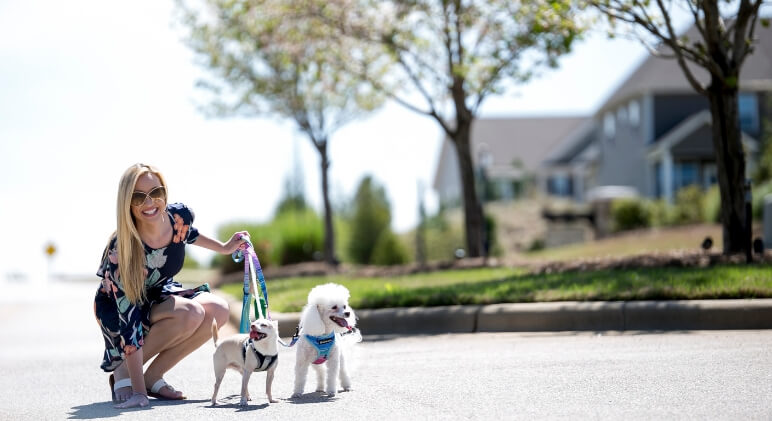
Have you ever walked outside barefoot and immediately wished you had shoes? The image of quickly lifting one foot after another (as if you’re doing a little dance) comes to mind. Because, when the weather starts warming up, the pavement temp rises too … and it can quickly become too hot for our little tootsies to handle. But what about our dogs?
A huge misconception that many people have is: A dog’s paws can tolerate anything. That’s not true. Just like our feet, walking on hot surfaces (like asphalt or concrete) can cause major discomfort and injury to your pup’s paw pads. Paws can suffer from severe burns, resulting in cracks, blisters, bleeding, and infection. Read on for some advice to help keep your pooch’s paws healthy during the hot Spring and Summer months!
So, How Hot Is The Asphalt Really?
According to the Journal Of The American Medical Association, when the air temperature is a comfortable 77ºF, asphalt in the sun is actually a whopping 125ºF! Taking it up a notch, when the air is 87ºF, the asphalt reportedly spikes up to 143ºF. That’s way too hot for our pup’s paws. Experts say when the asphalt reaches 125ºF, skin destruction can happen to dogs in as little as 60 seconds!
So, next time you head out for a walk, don’t just think of the air temperature. Be mindful that asphalt and other ground surfaces retain heat and scorch your fur kid’s feet.

What to Do
- Feel The Ground – When heading out for a walk, take a second to place the back of your hand on the pavement to check the heat. A good rule of thumb: If you can’t tolerate the temperature for at least 10 seconds then it’s too hot for your pup.
- Time Your Walks – One of the easiest things you can do is change the times you go for long walks. Try going early in the morning and later in the evening, when the sun isn’t at its strongest.
- Change Walking Areas – During the hot afternoon hours, if your pooch needs a potty break, try sticking to grassy areas.
- Use Paw Wax – Rubbing a little paw wax on your pup’s paws before walks can help create a protective layer.
- Use Dog Booties – If your dog tolerates them, dog booties provide a protective barrier between your dog’s paws and the hot ground. Plus, booties can protect against other hazards, like sharp objects or chemicals.

After Walks
After dog walks, make sure to do a paw check! Ensure your pup’s paws don’t have any blisters or injuries. Also, check for little pebbles or sharp stickers that may have gotten stuck in the crevices of your dog’s toes.
Also, look into moisturizing products like Natural Dog Company’s Paw Soother. Dry paws are more susceptible to damage from hot walking surfaces than healthy ones. So, a good paw moisturizer could work wonders. It’s important to note that you should never use human lotion on your dog’s paws.

What To Do If Your Pup’s Paws Are Injured
If you notice red marks or blisters on your pup’s paws then they are burned. If it’s a mild burn, immediately wash their paws with dog-safe antibacterial soap and then loosely wrap them with gauze. For more serious burns, make sure to visit your vet ASAP.
If you notice any cuts or scrapes on your dog’s paw pads, clean the area with a dog-friendly antibacterial wash. Then, put some antibacterial cream on the pad and wrap it with a bandage. *If you don’t have a pet first aid kit yet, check out THIS list of essentials. It’s always good to be prepared.