
Planning a road trip with your canine companion? Whether you’re driving cross-country or just a few hours away to your neighboring state, road trips with dogs require careful planning to ensure your furry family member stays safe and is comfortable.
Prioritize Safety with Proper Restraints
Do you restrain your dog when you drive? When we hop in the car, we buckle ourselves and our kids without a second thought. But when it comes to our dogs? Most pet parents don’t restrain them—and that likely comes as no surprise. I mean, haven’t we all seen a dog with its head (and sometimes half its body) hanging out the car window, ears flapping in the breeze? Or a pup casually riding in the bed of a pickup truck? While we might look at these dogs and think, “sooo cute,” these situations are actually serious safety hazards. Allowing your dog to hang out the window or ride in the back of a truck is a dangerous move for a few reasons:
- Your dog could jump or get thrown out of the vehicle into oncoming traffic.
- High-speed winds, dirt, debris, and bugs can cause injuries to your dog’s eyes, ears, and respiratory tract.
- It’s illegal in some states—yes, you could get ticketed. My friends over at Orvis put together THIS state-by-state breakdown of the current restraint laws.
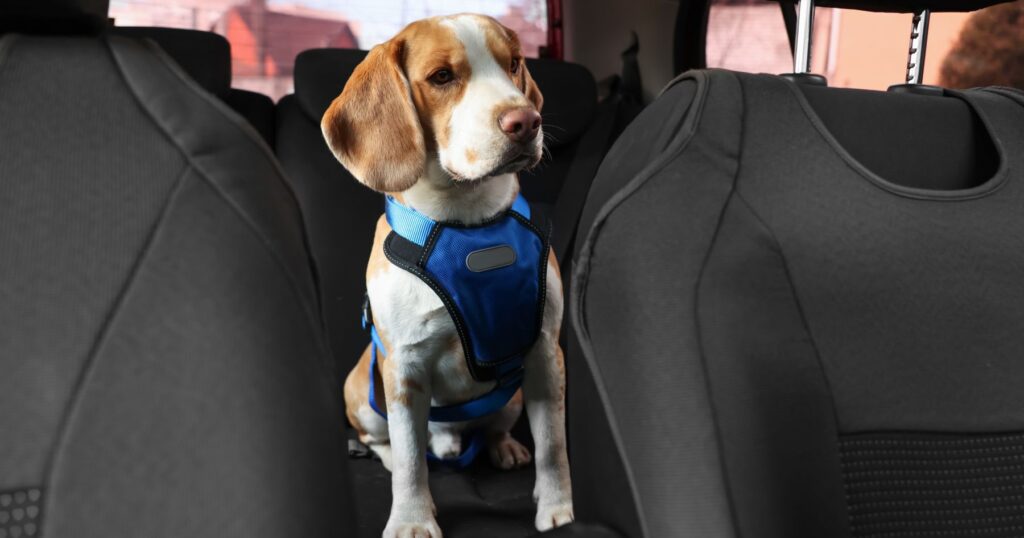
The safest place for your dog during a car ride? In the back seat, securely restrained. There are a few options when it comes to restraint:
- Seat Belt Harness: These are ideal for medium to large dogs. They clip into the car’s seatbelt system and allow your pup to sit or lie down comfortably, while keeping them from becoming a projectile in a sudden stop or accident.
- Crate: Great for small dogs, but can also work for all crate-trained pups, depending on the size of your car. Look for a well-ventilated crate that’s large enough for your dog to stand, turn around, and lie down. Make sure the crate is secured so it doesn’t slide or tip during the drive.
- Pet Booster Seat: For small dogs who like to see out the window, a booster seat with an integrated harness tether can offer both visibility and safety. (Note: Never clip this tether to your dog’s collar … only their harness)
No matter which option you choose, keeping your dog properly restrained helps protect them, you, and everyone else on the road. Safety first—even for our four-legged passengers.
Never Leave Your Dog Unattended
Leaving your dog alone in a parked vehicle can be dangerous, even for short periods. Temperatures inside cars can rise rapidly, leading to heatstroke or worse. Always take your dog with you when you leave the vehicle.
Plan for Regular Breaks
Dogs need regular opportunities to relieve themselves, stretch, and hydrate. Plan to stop every 2-3 hours to allow your dog to exercise and take bathroom breaks. These stops also provide mental stimulation as your dog explores new environments.
Pack Essential Items
Prepare a travel kit for your dog that includes:
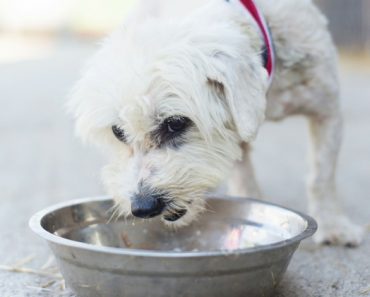
- Food and Water: Bring sufficient food and bottled water for the trip, along with portable bowls. For food, you can get a collapsible bowl (like THIS). For water, consider using a travel bottle with a flip-up silicone leaf that doubles as a bowl—it’s convenient and mess-free (like THIS). Maintain your dog’s regular feeding schedule to prevent digestive issues.
- Medications: Include any necessary medications, including monthly preventatives.
- Comfort Items: Pack your dog’s favorite toys, blankets, or bedding to provide the smell of home! It offers a dose of comfort and reduces anxiety during travel.
- Leash, Extra Leash, and Waste Bags: Even if your dog is used to roaming off leash, always keep them hooked up when in unfamiliar surroundings. Plus, be courteous and pick up after your dog!
- Identification: Ensure your dog wears a collar with up-to-date ID tags. Carry a recent photo of your dog in case they become lost.
- Health Records: Bring copies of vaccination records and any necessary health certificates, especially if crossing state lines or international borders.
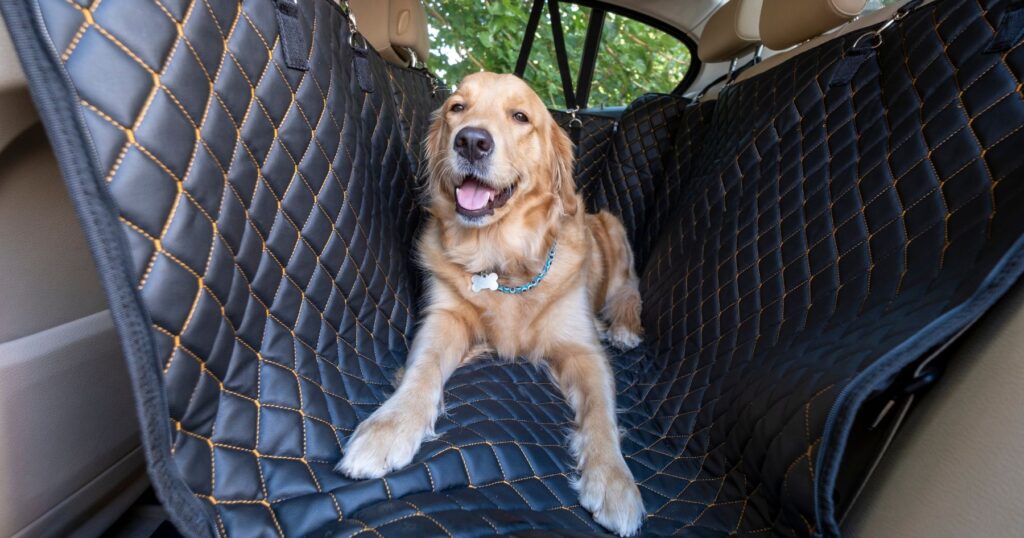
- Car Hammock: While this isn’t essential, it’s nice to have! It’s a protective cover that serves as a barrier between your furry family member and your car’s interior, ensuring a safe and comfortable journey for both. The primary function of car hammocks is to shield seats from scratches, dirt, debris, and fur. Ultimately, it prevents damage to the car’s upholstery. There are plenty of options to choose from. THIS one on Amazon has close to 6,000 reviews and averages 4.7 out of 5 stars!
- Paper Towels: Just because you’ve protected your back seat with a car hammock doesn’t mean a mess can’t happen. You may not use them, but a roll of paper towels will come in handy in case your dog gets sick or runs in some dirt/mud when out for a potty break.
- Pet First Aid Kit: This is another thing you hopefully won’t need, but should always have handy in case of an emergency. Check out this post to see some dog first-aid essentials.
- Flashlight: Useful during night stops or emergencies.
- Reflective Gear: Make your dog visible during evening walks or in case of roadside emergencies.
- Flea Comb and Tick Remover: I keep these items in my pet first-aid kit, but I also thought they deserved a spot of their own! There’s always a risk your pup will pick up an unwanted visitor when you’re out. This happened to me once on a road trip from North Carolina to Texas – it was a nightmare! Along with a flea comb, there is a special tick remover tool that you can order right from Amazon. Hopefully you’ll never have to use it, but it’s always smart to have.
Safe travels!