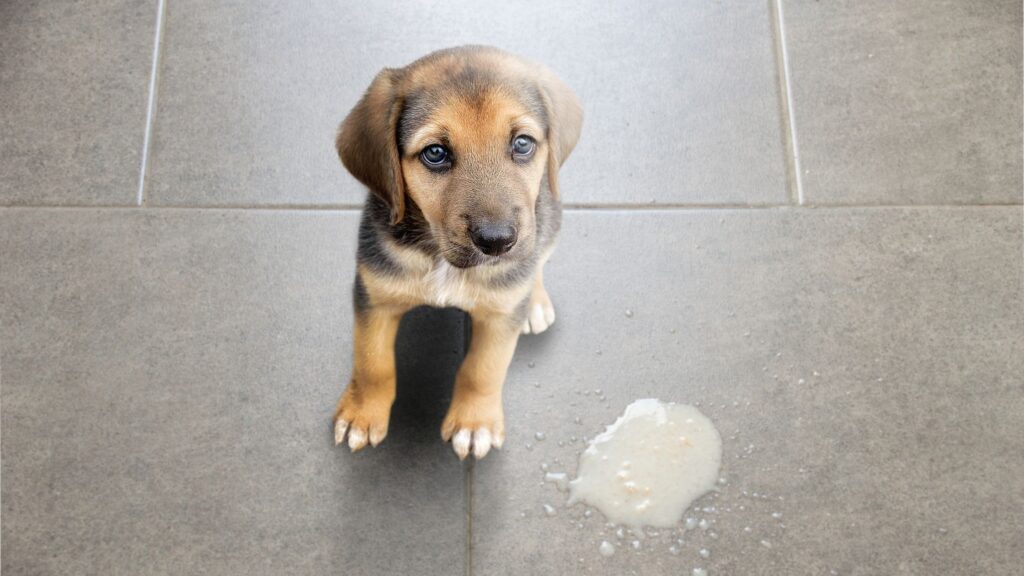
If you’re a dog mom (or dad) then you know … vomit happens. Most times, it’s nothing to worry about. But, it can be a warning sign of something serious.
How Do I Know If My Dog’s Vomiting Is Cause for Concern?
Not all vomit is created equal. So, the first thing you’ll need to do is take a peek at that pile of puke and assess it. Vomit ranges in color, consistency, and odor, which all offer clues. So, the first step is to take note of those three things.
Next, evaluate the frequency. How many times, and how often, has your pup thrown up? Was it just once and then back to business as usual? Or has your pup thrown up multiple times and appears under the weather? These are all things your veterinarian needs to know.

Vomiting vs. Regurgitation
First off, let’s figure out if Fido vomited or regurgitated. Yes, those are two different things!
Regurgitation is a passive process. It happens without warning. There’s no muscular involvement, no nausea, and no retching. Think of a burp. With regurgitation, when a burp happens, the food or liquid rushes up from the esophagus (AKA the muscular tube food passes through on its way to the stomach). The food never actually makes it to the stomach, so what comes back is undigested and appears much like it did when first eaten.
Some dogs regurgitate because they’re eating/drinking too quickly or exercise too soon after a meal. But it’s not that simple for all dogs. More serious conditions that could trigger regurge include obstructions, inflammation of the esophagus, and megaesophagus. Regurgitation may be a sign something is seriously wrong somewhere within the throat or esophagus.
Vomiting is an active process. There are normally warning signs a dog is going to vomit. As humans, we know full well how awful we feel before we throw up. Your dog feels the same way. You may notice him drooling, whining, pacing, gagging, and/or retching. You’ll see his stomach muscles in action as they work hard to force the food out of the stomach or intestines, back up the esophagus, and out of his mouth.
Many times, vomit happens and it’s nothing to worry about. But, in case your pooch is having a problem, being able to accurately describe it to your vet can be very helpful in diagnosing the problem.
Dogs may vomit from eating something they shouldn’t have, had a change in diet, possible food allergies, ingested something inedible (like a toy), or may have some underlying medical issue going on.
Vomit Consistency: Chunky
Chunky Vomit is chunky (it may appear to have an oatmeal-like consistency) because it’s made up of undigested food. It happens shortly after a dog has eaten and appears like whatever Fido just munched.
Chunky vomit can happen from:
- Eating something that upsets the stomach
- Eating too quickly
- Too much activity right after eating
- In the worst-case scenario, it could be from a possible obstruction which isn’t allowing food to pass through the digestive tract normally and is a medical emergency!
If Fido ate too fast, try to slow him down. If this is an isolated incident, there shouldn’t be anything to worry about. But, if he always gobbles his meals too quickly, it’s time to be proactive and slow him down. There are special food bowls on the market called slow feeders that consist of a maze-like structure to prevent a pooch from gobbling his food. I share more about them HERE!
Vomit Colors
Yellow Foamy Vomit – One of the most common reasons for yellow foamy vomit is an empty stomach. It’s especially common in the morning after a dog’s stomach has been empty overnight. Bile can build up in the empty stomach, causing inflammation, irritation, and a stomach ache (which can progress to vomiting the yellow foamy liquid).
If your pooch is throwing up yellow from an empty stomach, try feeding him a little snack before bedtime. This way his tummy is not empty for as many hours. Often, this solves the problem. Some other causes may be diet, inflammation of the digestive tract, pancreatitis, or Bilious Vomiting Syndrome (BVS). Read my full article on yellow vomit HERE.
Green Vomit often happens because your pooch ate grass or it could be bile. It’s normally not a cause for concern unless he continues to vomit. If it is bile and it’s not an isolated incident, it’s best to call the vet. Especially if he has any other symptoms such as loss of appetite, won’t drink, or shows other signs of not feeling well, like pain, discomfort, or weakness.
Red Vomit most often indicates blood. It’s important to note the amount, type, odor, and color of red vomit. Sometimes if a dog has been retching or has an upset stomach, you may notice a few small red streaks or specks in the vomit. This often happens from irritation and should go away as quickly as it came.
But if your dog is vomiting bright red liquid then he is vomiting fresh blood. This is a medical emergency and Fido needs to see the veterinarian ASAP. Depending on where the blood is coming from, how much he’s losing, and why, it can become fatal very quickly. A rapid loss of blood can compromise vital organs in the body. When organs don’t receive enough blood, they’re also denied the oxygen that’s carried in that blood.
Possible causes can be from the ingestion of a toxic substance, parasites, bacterial or viral infections, stomach ulcers, Hemorrhagic Gastroenteritis (HGE), severe recurrent vomiting, and various other underlying medical conditions. Waste no time in getting Fido to the veterinarian.
Brown Coffee Ground-Like Vomit is most often caused by older blood that’s been digested. This blood comes from further down in the intestines. This type of puke has a strong odor. As the blood continues to pass through the digestive tract, when the dog poops, he will likely have black tarry bowel movements. Just like vomiting bright red fresh blood from higher up in the GI tract, brown coffee ground looking vomit is a medical emergency. Contact your veterinarian right away.
Possible causes include ulcers, tumors, gastritis, foreign body ingestion, toxic ingestion, and various underlying medical conditions.
White Foamy Vomit can happen for many reasons, but one common cause is indigestion. This can happen from eating something that didn’t agree with him, overeating, eating too fast, spoiled food, grass, and the list goes on. If it’s an isolated incident and Fido’s otherwise feeling and acting normal then just observe him – he is probably fine. But, if Fido is having other symptoms of not feeling well and continues to vomit, it’s time to notify the vet. Of the many possible causes for throwing up the white foamy stuff, these are the most serious: Bloat, Kennel Cough, Parvovirus, Pancreatitis, and Rabies.
When to Call the Veterinarian
As I mentioned above, if Fido vomits once, seems happy, is eating, drinking, having normal bowel movements, and playing normally then he’s probably just fine. Observe him. No need to call the vet unless you notice him vomiting again or observe changes that indicate he isn’t feeling well.
If your dog throws up more than once, seems weak, sluggish, has loss of appetite, weight loss, pale gums, is dehydrated, constipated, diarrhea, seems to be in pain, and just not feeling well then call your vet right away. If your pooch is vomiting red blood or coffee ground material — call your vet immediately. There is no time for delay! This is a medical emergency that is potentially fatal depending on the severity of the bleeding.
What to Tell the Vet
When you call the vet to report Fido’s condition, be prepared to give details.
- When did he start vomiting?
- How many times has he thrown up?
- Is he still vomiting?
- What does it look like?
- Color?
- Texture?
- Amount?
- Odor?
- How is the dog now?
- Is he otherwise acting normal?
- Lying around sick?
- Does he appear to be in pain?
- Any detail you feel is important is always helpful to assist the vet in coming up with a diagnosis.
Scoop up some of the vomit in a clean Ziploc bag for the vet to examine. In addition to seeing it, the vet may want to run some tests on it to help with the diagnosis.