Have you ever heard the common belief that a cold, wet nose means your dog is healthy, while a dry nose signals something may be wrong? It’s a widespread notion among pet parents, but it’s not entirely accurate. In reality, a dog’s nose can be wet or dry for many reasons. Most of which are completely harmless! In fact, if you keep a close eye on your pup’s sniffer throughout the day, you will likely see it change. It may be dry in the morning and wet in the afternoon. That’s perfectly normal! Let’s take a closer look …
What Does a Wet Nose Mean?
1) Your Pup’s Nose is in Use
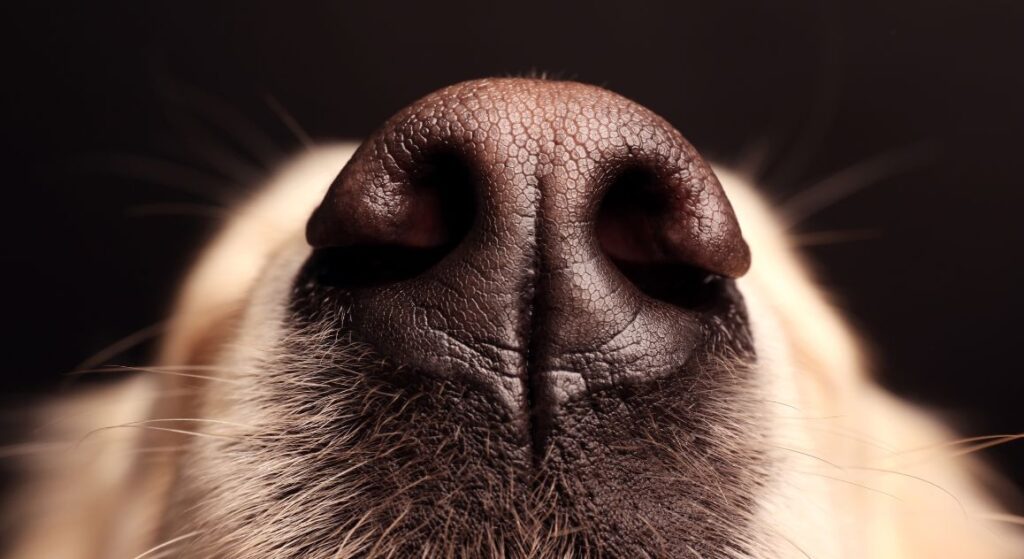
When dogs follow a specific scent, their nose develops a thin layer of moist mucus. This allows your pooch to absorb the scent chemicals around him, which enhances his sense of smell. It doesn’t stop there, though. Dogs then lick the mucus off of their nose to transfer the scent chemicals to the olfactory glands in the roof of the mouth. Doing this allows your dog to separate and better identify various smells. In this case, your dog’s nose is wet for two reasons:
- The layer of mucus
- Your dog has been licking it!
2) Your Pooch is Trying to Cool Down
Dogs primarily regulate their body temperature through panting, but their noses also play a role in this process. A wet nose helps to cool them down. The moisture on the nose evaporates and helps to reduce body heat, similar to how sweating works in humans.
3) Your Dog is Well Hydrated
It makes sense when you think about it. A well-hydrated dog is more likely to have a wet nose. Proper hydration supports the body’s ability to produce mucous, which keeps the nose moist.
4) Some Breeds Have Wetter Noses
To some extent, it’s genetics! For example, brachycephalic breeds — such as Bulldogs, Pugs, and Boxers — tend to have wetter noses. Their shorter nasal passages and specific facial structure contribute to more nasal secretions, helping keep their noses moist. Plus, breeds known for their scent-tracking abilities — such as Bloodhounds, Beagles, and Basset Hounds — also typically have wetter noses. A wet nose enhances their ability to capture scent particles, which is crucial for their tracking and hunting skills!
What Does a Dry Nose Mean?
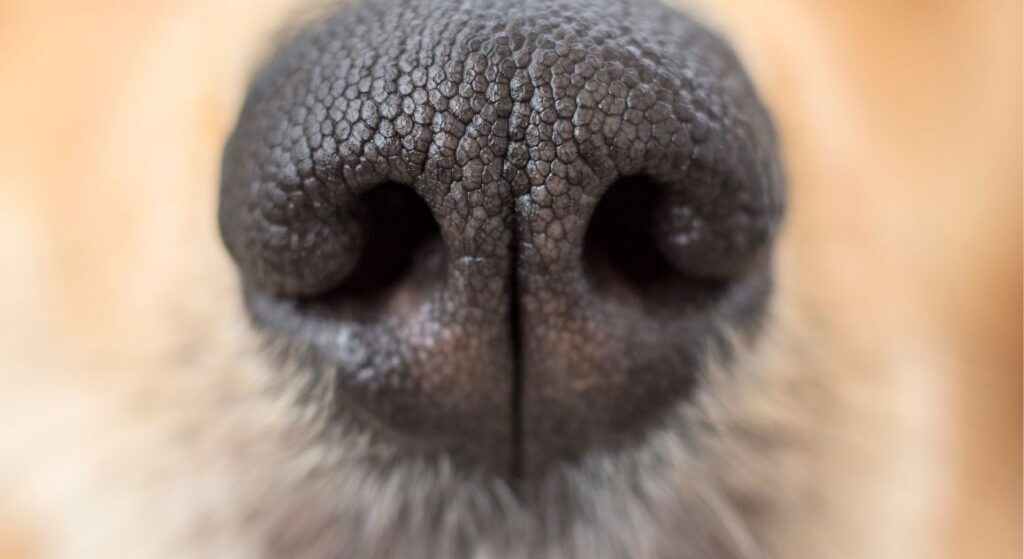
1) A Dog’s Nose Naturally Gets Dry During Sleep
When your dog first wakes up in the morning you may notice his nose is dryer. According to PetCoach, there are two main reasons for this: “A dog’s nose may be dry after sleeping, partly due to the drop in body temperature, and partly because he has not been licking it while he was asleep.”
2) Environmental Factors
A dog’s nose can become dry due to environmental factors such as exposure to sunlight, wind, or cold air. Just like our skin, a dog’s nose can get chapped or sunburned, leading to temporary dryness.
3) Your Pup is Dehydrated
If your dog isn’t drinking enough water throughout the day, his nose can become dry. So make sure your pup’s drinking bowl is always filled with fresh water.
4) Old Age
As a dog gets up in years, they experience bodily changes. One of these changes is their nose may become dryer. Just as older humans may experience drier skin, senior dogs may produce less mucous, which helps to keep their noses wet. Ultimately, this natural decline in mucous production can result in a drier nose. Additionally, less energetic senior pups might not lick their noses as frequently as younger dogs. Licking helps keep a dog’s nose moist, so less frequent licking can lead to a drier nose.
5) Medications
Some medications can have side effects that cause dryness of the mucous membranes, including the nose.
When It’s Time To See a Vet
- If your dog has thick discharge coming from his nose, it’s time to schedule an appointment with your vet.
- Any discharge that comes from your dog’s nose should be clear. If it isn’t colorless then it’s time to see your vet.
- If your pooch is pawing at his nose, it’s time to visit your vet.
- Any bleeding from your dog’s nose isn’t normal and you should get to your vet immediately.
- If a dry nose is accompanied by other symptoms such as lethargy, vomiting, diarrhea, or a change in appetite, it is wise to consult a veterinarian.