
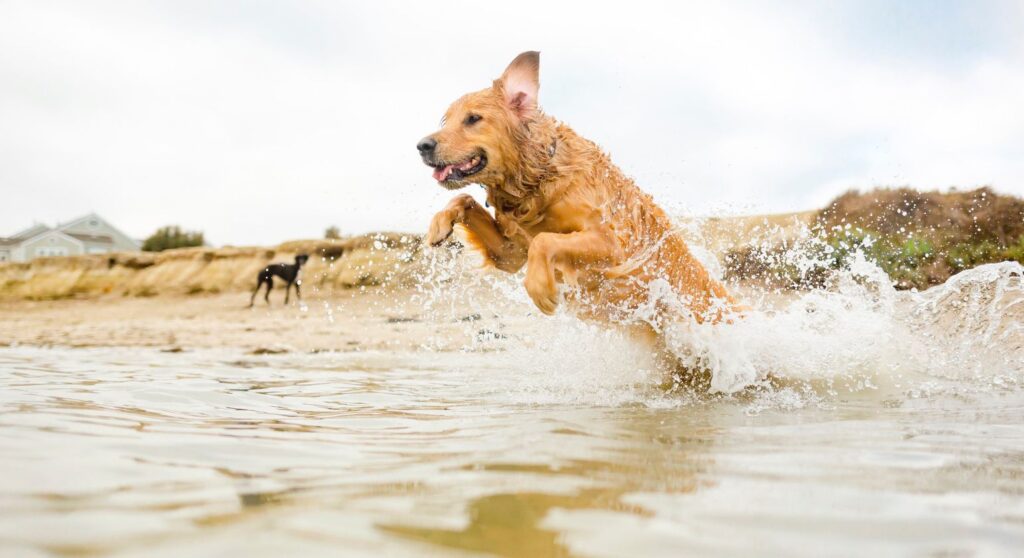
The beach is a popular destination for people and their furry family members. Personally, I love taking my dogs to the beach at all times of the year. During the chillier off-season months, my pups love the open space to run and explore. During the warmer and more-crowded summer months, they enjoy people-watching and dipping their paws into the water. While they always have a great time, I’m well aware there are hazards I need to watch for in order to provide a fun and safe outing. Here are 7 things to keep in mind during your next beach trip.
1. Hot Sand
Have you ever kicked off your flip-flops, stepped onto the sand, and immediately let out a quick, “OUCH!” In the middle of the day, when the sun is the strongest, it can scorch the sand, making it uncomfortable to walk on for both you and your dog! When the sand gets too hot, it can burn your dog’s paw pads, leading to potential injuries. So, before heading onto the beach, get in the hang of testing the sand’s temperature by placing your hand on it and holding it there for about 10 seconds. If it feels too hot for you, it’s likely too hot for your dog. Consider visiting the beach in the early mornings or late afternoons, when the sun isn’t as strong. You can also help protect your pup’s paws with paw wax (I love the balms by Natural Dog Company) or dog booties.
2. Sunburn
Just like for people, prolonged exposure to the sun’s harmful UV rays can cause painful burns and increase the risk of skin cancer for our canine companions. As you can probably imagine, dogs with short hair and/or light-colored fur are the most susceptible to sunburn. To protect our pups at the beach, plan your visit during early mornings or late afternoons when the sun isn’t as intense, make sure to provide shade, and consider applying pet-friendly sunscreen to exposed areas such as the nose, ears, and belly. (Note: Human sunscreen should never be applied to dogs, as these products often contain ingredients that can be toxic or irritating to our pups. Dog-formulated sunscreens, on the other hand, are designed with ingredients that are safe for canine use, providing the necessary protection without posing any health risks.)

3. Heat stroke
Heat stroke is a potentially life-threatening condition that occurs when a dog’s body temperature rises to a dangerous level. If you feel overheated during your beach trip, remember this: Dogs are more susceptible to heat stroke than people due to their limited ability to regulate body temperature effectively. A few warning signs of heat stroke in dogs:
- Excessive panting and drooling
- Rapid or difficulty breathing
- Disorientation or confusion
- Bright red gums and tongue
- Weakness or collapse
- Vomiting or diarrhea
- Increased heart rate
Ensure your dog stays hydrated by bringing plenty of fresh water. Keep exercise sessions shorter, provide shaded breaks, and avoid the hottest parts of the day. If you notice signs of heat stroke, get your dog to a shaded area immediately, wrap them in towels soaked in cold water (not ice water) to bring down body temperature, offer something to drink (as long as your dog is conscious), and seek immediate veterinary attention.
4. Sand Impaction
Sand impaction is a potentially life-threatening condition that occurs when dogs ingest excessive amounts of sand. Once those tiny sand particles get into your pup’s mouth and begin traveling down into the intestines, they become wet, heavy, and compact. Ultimately, this collection of wet sand forms into a solid lump, and, if there’s enough, it can block the entire intestinal tract. Since dogs explore the world with their mouths, accidental ingestion can happen in many ways. Find out more about sand impaction and prevention tips in our article HERE.

5. Strong Currents
Whenever I go to the beach, I almost always see larger dogs swimming in the ocean. Sometimes their guardian throws a ball into the water for them to fetch. Other times they’re just showing off their doggy paddle. While it’s fun for many dogs to swim, be mindful of strong currents. When the waves are too rough, they can pose a significant threat to both people and dogs. Stick to calm, shallow waters where you can easily monitor your pup’s safety. Also, consider using a doggy life jacket, like THIS best-seller from Outward Hound.
6. Marine Life
Speaking of dogs taking a dip in the water … Be on the lookout for marine life, such as jellyfish and crabs. Contact with such sea creatures could lead to stings or bites, ultimately causing intense pain, swelling, and allergic reactions. Always monitor your dog when in the water and discourage them from approaching unfamiliar marine creatures.
7. Trash and Litter
Beaches are sometimes littered with harmful debris, such as broken glass, fishing hooks, medical waste, or food wrappers. These pose significant hazards to dogs, such as cuts, injuries, or toxicity (if ingested). Keep a close eye on your dog and stay away from littered areas.