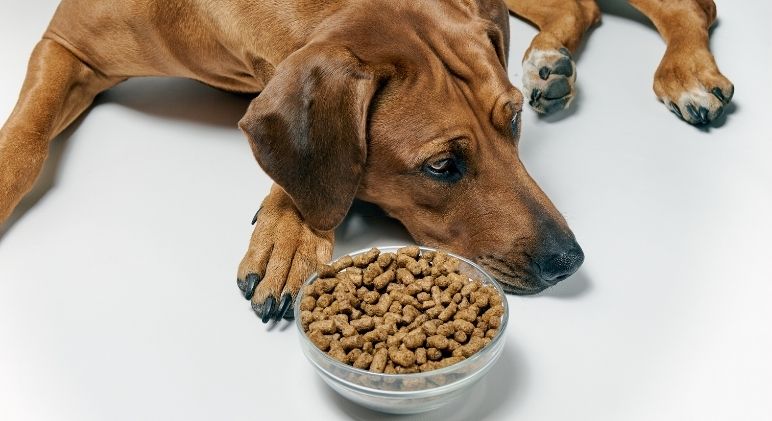
Let’s pretend your kitchen is a doggy restaurant, where your canine companion dines daily. Here’s a question for you (AKA the chef and server): What’s on the menu? For many, the special each night is the same: Hard, crunchy kibble poured into a bowl. Sound familiar?
While I’m an advocate of feeding a balanced fresh food diet filled with real meats and vegetables, I understand that doesn’t work for everyone. If you’re after the cost and convenience of kibble, but want to bump up the nutritional value of your pup’s meals, there are a few things you can do:
- Add nutritional supplements, like high-quality fish oils, digestive enzymes, and probiotics.
- Replace a portion of the kibble with fresh foods. Think: finely chopped veggies, lean meats, organ meats, a sardine, or an egg.
- Add moisture.
In this article, we’re going to focus on that last one: Moisture.

Kibble Lacks Moisture
It’s not hard to believe that dry dog food lacks moisture. In fact, kibble was designed to be a low moisture product. If you’ve ever watched the documentary Pet Fooled, you may remember that prior to WW2, dog food was sold in cans and had a much higher moisture content. During the war, though, meat became limited and tin was reserved for ammunition. So, officials in the pet food industry needed to come up with something more convenient that could be packaged in a bag. Enter: Dry Kibble.
Dry kibble often contains 6-10% moisture, which is nowhere near what dogs need. That’s why dogs fed a kibble-only diet tend to drink a lot more water … they’re dehydrated.
Benefits of Hydrating Dog Food
Just like people, water is an essential part of your pup’s body. High-moisture diets benefit:
- Digestion: Water plays a key role in the digestive process. First, it helps to break down food so your dog’s body can better absorb the nutrients he just consumed. After extracting nutrients from the food, your dog’s body carries leftover waste through the digestive tract and, eventually, out of the body. If your dog doesn’t consume enough water, his stool may become too hard and dry, leading to constipation.
- May Lower Risk of Bloat: Can you guess what happens when dry dog food comes in contact with moisture? That’s right – it swells. If food swells in the digestive tract, it’s said to increase the risk of bloat or gastric torsion. Many experts believe allowing your pup’s kibble to soak before he chows down may help reduce that risk. Find out more about bloat in dogs HERE.
- Weight: The water – or other nutritious liquid – you add to your dog’s food bowl will help to fill up his stomach, leaving your dog with a more full feeling. Depending on your dog’s eating style, this may help prevent over-eating.
- Urinary/Kidney Health: Staying hydrated also helps your dog by keeping the urinary system well flushed. This is essential if your pup is prone to UTIs or kidney stones.
- Flavor: Another great reason to consider adding liquid to your dog’s kibble is to enhance the flavor. While it’s obvious nutritious liquids like goat’s milk and bone broth will add additional flavor, even a little warm water helps.
- Dental Issues: If you’re caring for a senior dog with dental issues, crunchy kibble may be too difficult for them to eat.

3 Liquids to Add to Kibble
- Warm Water
- Goat’s Milk – This stuff is liquid gold for your canine companion. It’s rich in probiotics, meaning it promotes diverse gut flora (good gut health is key for overall health and wellbeing – in canines and humans). Plus, it’s high in protein and other key nutrients. Either buy a bottle of raw goat’s milk to keep in your refrigerator or opt for a dehydrated instant formula (like THIS ONE from The Honest Kitchen) where you simply add water.
- Bone Broth – This refers to a nutritious and comforting stock traditionally made by simmering animal bones in water for a long period (between 8-24 hours). As the bones simmer, they release powerful vitamins, minerals, and other beneficial healing properties. Bone broth is loaded with a gooey substance called gelatin (AKA broken-down collagen), which benefits both digestive health and joint health. It’s also filled with nutrients that fight inflammation and benefit the immune system. Please note: Do not feed dogs bone broth infused with onion or other foods considered toxic to canines. Similar to the goat’s milk, you can either make your own bone broth or purchase a dehydrated instant formula where you simply add water.
How Much Liquid to Kibble?
Depending on your pup’s portion sizes, try adding 1/4 cup to 1/2 cup of liquid to your dog’s dry meals. Let the liquid absorb into the kibble for about 10 minutes before serving. (Warming the liquid first will help it to absorb quicker.)
But Wait … Doesn’t Dry Food Clean Dog Teeth?
Have you ever heard someone say dry and crunchy kibble helps to clean a dog’s teeth? As I continue to share what I feed my dogs, I’ve heard a few people say they won’t switch to fresh food because they believe it’s not as good for their dog’s teeth. The idea behind this popular notion is that crunching down on kibble will naturally scrape the teeth clean. But, I only have one thing to say: It’s simply not true.
Regular dry kibble doesn’t clean your dog’s teeth any more than cereal, pretzels, or potato chips clean yours. I wrote an entire blog post on this topic. You can check it out HERE.