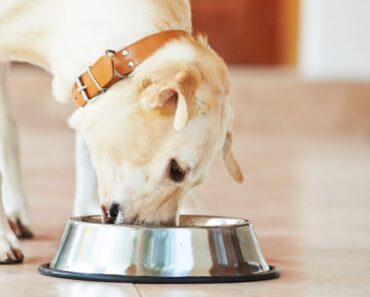

How do you feed your dogs? Do you fill their food bowl once and leave it out for them to graze until it’s empty? Or do you portion out meals and feed at specific times of the day? For many dog parents, the convenience of setting and forgetting is enticing. Perhaps you even have an automatic feeder where you simply load the bowl up with kibble and let it sit out for days. While free-feeding may make mealtime easier on you, there are some major drawbacks. Let’s dig in …
1. Food Freshness
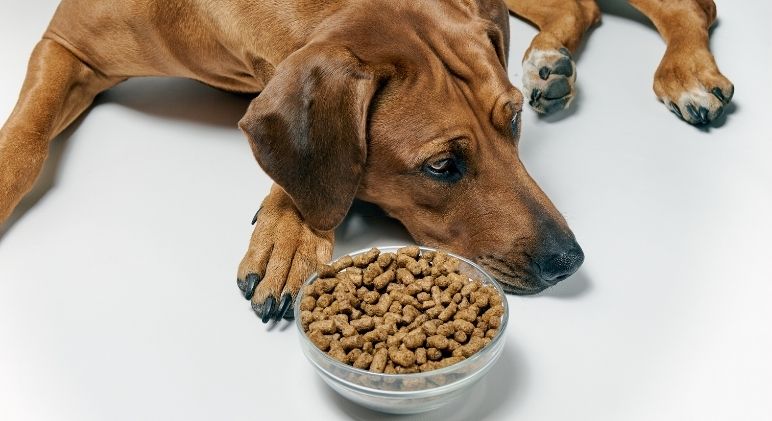
It’s pretty obvious why dogs who eat raw food or freshly cooked meals can’t free-feed. When left out for too long, fresh food spoils. But did you know kibble left open to air can spoil and turn rancid too? Leaving kibble out for an extended period significantly impacts the food’s quality … and ultimately your dog’s health.
- As the fats in (and sprayed on) kibble turn rancid, the nutritional value decreases. If your dog continues to eat this food, his tummy may get full, but he won’t get the nourishment you had intended. Rancid fats reduce the protein content, vitamins, minerals, and antioxidants in kibble.
- Long-term consumption of rancid fats can make your dog sick. They’ve been known to cause gastric upset, diarrhea, kidney and liver disease, and even cancer.
Find out how to properly store kibble in THIS article.
2. Weight Management
Most dogs love to eat … and don’t know when to stop! If food is available, some dogs may even chow down out of boredom rather than hunger. That’s why free-feeding can easily lead to overeating and weight gain. By controlling portion sizes and setting specific mealtimes, you help your dog maintain a healthy weight, reducing the risk of obesity and associated health issues.
3. Monitoring Health
With free-feeding, it’s hard to know exactly how much your dog is consuming each day. This makes it difficult to monitor their appetite, which is often an early indicator of health problems. By feeding your dog on a schedule, you’re able to gain much better insight into their eating patterns. If you notice your dog suddenly eats more or less than usual, it’s time to call your veterinarian. Prompt detection and treatment of health issues can significantly impact the outcome … and your dog’s overall well-being.
4. Potty Training
Are you in the thick of potty training? One of the best things you can do for your young puppy is to implement a feeding/bathroom routine. Here’s the thing: Puppies in the potty training phase often need to go to the bathroom right after eating due to their fast and efficient digestive systems. If you free-feed, it’s challenging to predict when your puppy will need to go out. This makes accidents much more likely.

5. Training Opportunities
Whether you’re teaching your dog basic commands (like “Sit” and “Stay”) or working to master fun tricks, it’s a missed opportunity if you’re not turning mealtime into a training session. Instead of using treats, you can use their regular food as a reward during training. Hand-feeding your dog their meal, piece by piece, after each command is fulfilled, reinforces good behavior and obedience. Plus, it also helps you build a strong bond with your canine companion!
6. Stress
Do you have multiple dogs? Free-feeding out of one communal bowl can cause stress levels to rise and lead to territorial behavior. Dogs, by their very nature, are instinctively driven to compete for resources. That includes food. Even in a home where there is plenty of food to go around, this instinct can lead to food aggression. This behavior, rooted in their evolutionary history, manifests when dogs feel the need to protect their food from others. Feeding multiple dogs from the same bowl can exacerbate this problem, as they may feel threatened by the presence of another dog during mealtime.
Instead, feed your dogs out of their own bowl, in their own designated spot, and at a set time. This will allow each dog to eat in peace, minimizing conflicts and promoting a harmonious environment.

How Often Should Dogs Eat?
Consult with your veterinarian to determine what’s best for your dog. As a general rule of thumb, the number of meals a dog should have depends largely on their age and health needs:
- Puppies: Typically need to eat three times a day. Their rapid growth and high energy levels require more frequent nourishment.
- Adult Dogs: Usually do well with two meals per day. Some may thrive on a once-daily feeding schedule, but twice daily is generally preferred for better digestion and energy distribution.
- Senior Dogs: Like adult dogs, they often benefit from two meals a day, although some may need more frequent, smaller meals due to health issues.