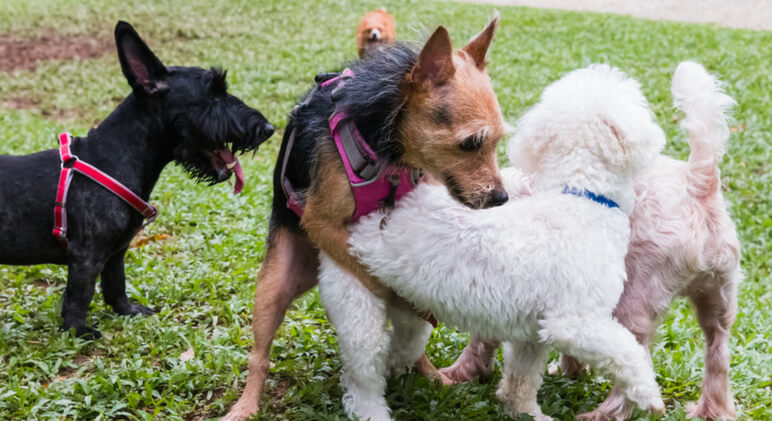
Dogs humping … it’s a behavior that makes pet parents either super uncomfortable, embarrassed, confused, or a little entertained. Sometimes they’re wrapping their front paws around another canine to get in a few good hip thrusts. Other times it’s a squeaky toy or pillow. And then there are those moments where the intended mounting post is your hand or leg. Whatever the case, humping or mounting is natural for all dogs. Yes, all dogs. That means you’ll see the behavior from both males and females, intact or altered (spayed/neutered). But the real question is: Why do dogs hump? Read on for the common motives!
Sexual
You may have expected this one! Humping or masturbating is often a sexual behavior. Now here’s something that you may not have expected: Sexually motivated humping isn’t only an intact (non-neutered) male thing. Neutered males can also experience such sexual arousal and can actually display erections and ejaculate just like intact males. Additionally, intact and altered females also exhibit sexually motivated humping.
According to the ASPCA: “Sexually motivated mounting and masturbation are often accompanied by ‘flirtatious’ body language and courtship behavior (tail up, ears rotated backward, licking, pawing, play bows, etc.).”
Dominance
Some dogs mount as a way to display their social status, exerting both power and control. If dominance is the motive, experts say a male dog may or may not get an erection, but he is unlikely to ejaculate.
Over-Excited During Play Time
Sometimes, if a dog gets super excited, he may have the urge to mount another dog or object. This can happen during intense play sessions, when guests arrive, or during any highly stimulating event. The behavior is a way for dogs to release pent-up energy. When this behavior happens occasionally then it’s viewed as completely normal. If, however, this happens during every play session then it may be a sign of an undersocialized dog.
Stress
For some dogs, mounting is their trigger response to feeling stressed, nervous, or anxious. According to the AKC: “Masturbating can become a compulsive habit, especially if a dog does it in response to stress.” In these cases, the repetitive motion of humping can be soothing for the dog, similar to how some humans might fidget or pace when anxious.
Attention Seeker
Dogs are smart and often learn that certain behaviors get a reaction from their humans. If a dog realizes that humping garners attention, even if it’s negative attention, they may continue the behavior as a way to engage with you.
Medical Condition
While humping, mounting, or masturbating is usually a normal and relatively harmless dog behavior, there are certain instances where it could be the result of a medical condition. If you notice your dog excessively mounting things and licking himself then talk to your vet. The following medical conditions have been linked to such behavior:
- Urinary tract infections
- Urinary incontinence
- Skin allergies
- Priapism in males (persistent and painful erections)
How To Prevent Your Dog From Humping
While you’ve heard me refer to humping or mounting as a normal behavior, that doesn’t mean you should encourage it. Here are some tips to help you prevent it:
- Socialize: Proper socialization can help reduce humping behavior by teaching your dog appropriate ways to interact with other dogs and people. You can enroll your puppy in socialization classes where they can learn to play and interact appropriately with other dogs. You can also arrange regular playdates with other well-behaved dogs to help your dog practice good social skills!
- Provide Adequate Physical and Mental Stimulation: Make sure your dog is exerting enough energy during the day by scheduling time for exercise and playing with interactive toys/puzzles.
- Training and Commands: Teaching your dog basic obedience commands can be very effective in managing humping behavior. Commands such as “leave it,” “off,” or “sit” can be used to interrupt the behavior and redirect your dog’s attention to something more appropriate.
- Redirect: When you notice your dog starting to hump, calmly interrupt the behavior and redirect them to a more appropriate activity. Avoid yelling or punishing your dog, as this can increase anxiety and potentially exacerbate the behavior. Instead, use toys or commands to distract your dog.
- Manage Stress and Anxiety: If your dog humps as a way to cope with stress or anxiety, addressing these underlying issues is crucial.
- Consult with a Behaviorist: If humping persists despite your efforts, seeking help from a professional dog behaviorist can be very beneficial. They can assess your dog’s specific situation and develop a customized plan to address the humping behavior.