
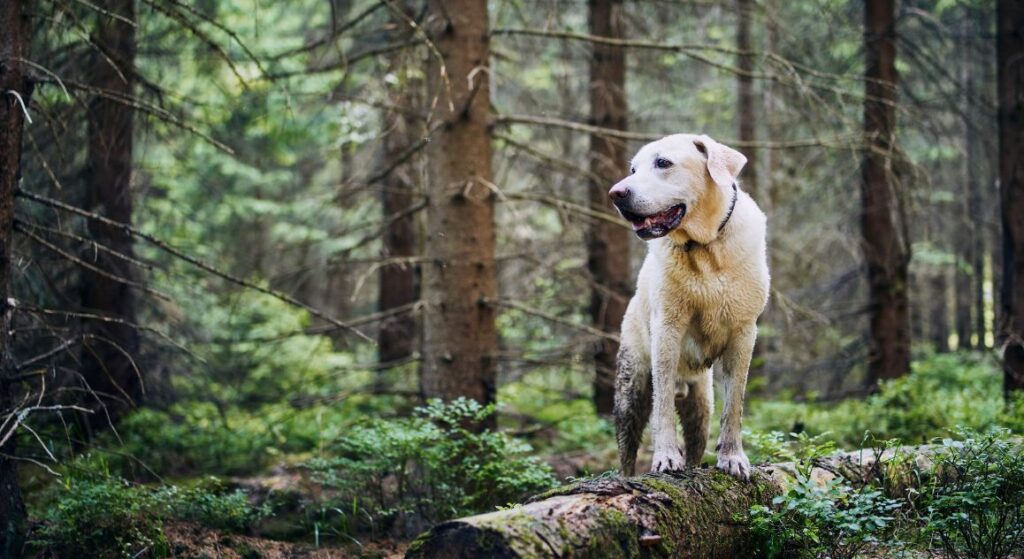
With the sun shining and temperatures rising, you’re likely spending more time in the great outdoors with your furry family member. Perhaps you enjoy taking your dog on adventurous hikes through the woods or simply spending more time in the backyard. Either way, you’re bound to spot various plants … maybe poison ivy. This sparks the question: “Can dogs get poison ivy?” Let’s dig in …
What Is Poison Ivy?
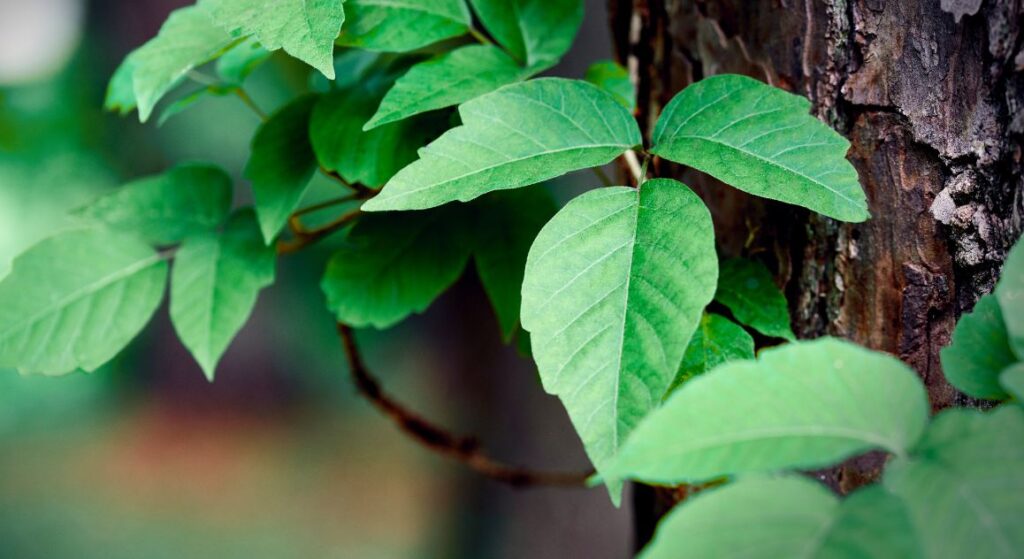
Poison ivy (Toxicodendron radicans) is found throughout the United States, except for Alaska, Hawaii, and parts of the West Coast. It’s commonly found in wooded areas, along riverbanks and lakefronts, and even around the perimeter of some backyards. It typically has three glossy green leaves per stem, with smooth or toothed edges. The saying “Leaves of three, let them be” is a handy way to remember what to look out for. According to the U.S. Food & Drug Administration, “Leaves are reddish in spring, green in summer, and yellow, orange, or red in fall.”
When you think of poison ivy, one of the first things that likely comes to mind is an intense rash. The danger of poison ivy lies in an oily resin called urushiol. This substance is present in every part of the plant, including the leaves, stems, and roots. When humans come into contact with urushiol, it can cause a red, itchy, and blistering rash that can last for weeks.
Can Dogs Get Poison Ivy?
Dogs are curious creatures. So, they may be tempted to explore areas where poison ivy grows. According to the Pet Poison Helpline, the good news is dogs are generally less susceptible to poison ivy than humans. This is primarily because their long hair/fur acts as a protective barrier, preventing the urushiol oil from reaching their skin. However, this doesn’t make them completely immune. Certain areas of a dog’s body, such as the underbelly, groin, and inside the legs, have less fur and are more vulnerable to the plant’s oil. Similar to humans, if your dog does get poison ivy, an itchy rash may appear.
It’s important to note: While dogs may not suffer as much from poison ivy, they can act as carriers of the urushiol oil. Let me explain … If a dog brushes against poison ivy, the oil can stick to their fur. When you then touch your dog, the oil can transfer to your skin, potentially causing a reaction.
What Happens If Dogs Eat It?
If a dog eats poison ivy, they may experience GI problems, such as vomiting, diarrhea, and abdominal pain. While it’s rare, dogs can go into anaphylactic shock. If you believe your dog has eaten poison ivy and is showing signs of difficulty breathing contact your veterinarian immediately.
Prevention
Preventing your dog from coming into contact with poison ivy involves a few proactive steps:
- Stay Far Away: Learn to identify poison ivy and avoid areas where it grows, especially during hikes or walks in the woods.
- Remove It: If poison ivy is growing in your backyard, carefully remove it.
- Supervise Outdoor Time: Keep a close eye on your dog during all outdoor activities.
- Regular Grooming: Regularly grooming your dog can help identify any potential exposure to poison ivy and remove any urushiol oil that may be on their fur.
Treatment
If your dog comes into contact with poison ivy, here are the steps to take:
- Wash Thoroughly: Bathe your dog with warm water and pet shampoo (look for one that includes oatmeal) as soon as possible. This can help remove the urushiol oil from their fur.
- Wear Gloves: When treating your dog, remember to protect yourself by wearing gloves. This will help avoid getting the oil on your skin.
- Monitor for Symptoms: Watch for any signs of a rash or irritation, especially in less furry areas like the underbelly. Additionally, if you suspect your pup has eaten any poison ivy, monitor for GI upset or breathing problems.
- Consult Your Vet: If your dog shows signs of distress, consult with your trusted veterinarian for further advice and treatment.