
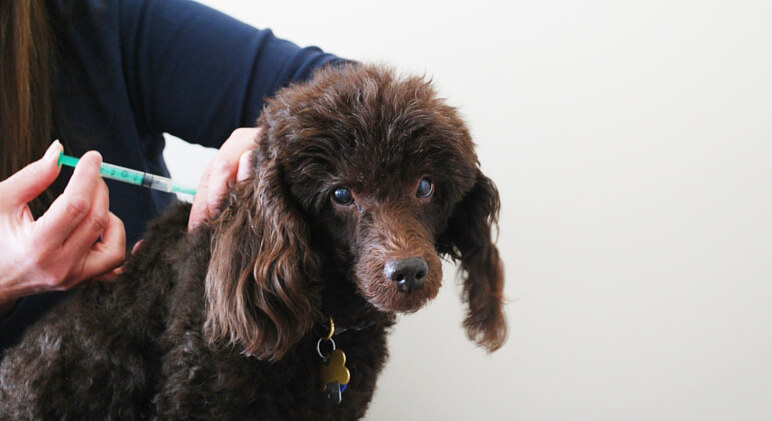
Whenever I bring a new puppy home, the first thing I do (aside from spoiling the pup) is schedule a check-up with my veterinarian. Along with making sure young Fido is healthy and parasite-free, during my visit, I also schedule future appointments for vaccines. Getting your dog protected with the proper vaccinations is one of the most important things you can do to keep your fur baby healthy. With that said, there are a wide variety of vaccines available and your puppy likely doesn’t need them all. That’s why they’re broken down into two categories: core and non-core.
Core Vaccines
Core vaccines are considered important for all dogs to get because all dogs are at risk for these diseases. They include:
- Canine Parvovirus – Often called parvo, canine parvovirus is a highly contagious and life-threatening virus that affects the stomach and small intestines. Transmission can occur through exposure to an infected dog’s feces, by other animals, people, or objects. One of the most important things to stress is how contagious this virus really is. Here’s a crazy fact: It was first identified in the 1970s and only took two years to spread globally! There is no cure for parvo. Vets focus on supportive care and treating symptoms. Find out more about Parvo in dogs HERE.
- Distemper – Canine distemper is very contagious and another potentially deadly viral disease that attacks the respiratory, gastrointestinal, and nervous systems. Like parvo, the scariest part about canine distemper: There’s no cure. Dogs can get distemper through direct contact with an infected animal or object. This virus is airborne. So, if an infected dog or animal coughs, sneezes, or barks, aerosol droplets are spread into the air, putting nearby dogs at risk. The treatment is to try and prevent secondary infections and control the symptoms. For most, it is fatal. Find out more about distemper HERE.
- Canine Hepatitis (Adenovirus) – Infectious canine hepatitis is a highly contagious viral disease caused by canine adenovirus type 1 (AKA CAV-1). Dogs can get the disease by inhaling or ingesting an infected animal’s body fluids, such as urine, feces, blood, saliva, and nasal or eye secretions. Once introduced into the body, the virus moves to the tonsils and then the bloodstream, where it can infect the eyes, liver, spleen, and kidneys within a few days. Puppies and unvaccinated dogs are at the highest risk.
- Rabies (Required by law) – This is a devastating viral disease that affects the central nervous system of all mammals, including dogs, cats, and people. It often results in death. Since rabid animals secrete the virus through their saliva, rabies is primarily passed to dogs through an infected animal’s bite. In North America, the raccoon, skunk, fox, coyote, and bat are all top sources of infection. Since it’s a devastating virus, difficult to diagnose, and there is no treatment, in the United States, the rabies vaccination is mandatory by law. While boosters are required, the frequency depends on each state. Some states offer exemptions in certain cases. Talk to your veterinarian for more information. You can also find out more about rabies HERE.

Non-Core Vaccines
Non-Core vaccines are administered based on a dog’s risk of exposure.
- Bordetella – Bordetella bronchiseptica is a bacterium known to cause kennel cough in dogs. Since it’s airborne, dogs can catch it just as you would catch a cold or the flu. Dogs that go to boarding facilities, daycares, grooming shops, and parks are considered high risk since they’re in close contact with other dogs.
- Canine Influenza Virus – The canine influenza virus – more commonly referred to as the dog flu – is a highly contagious virus that causes a respiratory infection in dogs. The majority of dogs exposed will develop mild symptoms, including coughing, sneezing, nasal discharge, lethargy, and loss of appetite. However, the first United States outbreak in Chicago showed some dogs developing severe cases with a high fever and clinical signs of pneumonia, requiring hospitalization. Dogs who are around a lot of other dogs are considered a higher risk. While there is no known cure, veterinarians work to control symptoms and prevent secondary infection. Most dogs recover at home with proper care.
- Leptospirosis (Lepto) – Often referred to as lepto, leptospirosis is an infectious disease that can affect both humans and animals, including our canine companions. It’s caused by spiral-shaped bacteria called leptospires. If your dog becomes infected (either by drinking contaminated water or coming into contact with an infected animal’s urine), the bacteria can multiply in their bloodstream and eventually move into the tissues. They concentrate in the liver and kidneys, causing damage to these organs. The amount of damage depends on each dog’s immune system. Find out more about Lepto HERE.
- Borrelia burgdorferi (Lyme Disease) – Lyme Disease is a tick-borne infection caused by the bacteria Borrelia burgdorferi. It’s the most common form of tick-borne illness in the U.S. To transmit Lyme Disease, a tick must remain attached to its host for approximately 24 to 48 hours. That’s why, if you’re diligent and check your pooch (and yourself) after every outing, there’s a better chance of spotting the unwanted hitchhiker. Then, you can grab a pair of tweezers or tick remover to get it off before it has a chance to transmit the disease. If you’re uncomfortable removing the tick yourself, many vets will remove it for you as a walk-in technician appointment. In the United States, the deer tick is most commonly found in the northeast, northern central states, mid-Atlantic, and parts of the west coast.
Puppy Shot Schedule
Your puppy’s vaccination series will begin when he’s approximately six weeks old, and puppy shots should be completed around 16 weeks of age. Work with your vet to determine the best schedule for your puppy, as many vets will space out vaccines in smaller patients to prevent reactions (dogs <10 pounds). While your vet may recommend additional non-core vaccines based on your puppy’s lifestyle and risk level, here is a basic puppy shot core vaccine schedule:
- 6-8 weeks: first DHPP shot (combined core vaccines of distemper, hepatitis, parvovirus, and parainfluenza)
- Can add in Bordetella between 8-10 weeks (non-core)
- 10-12 weeks: second DHPP shot
- 12-14 weeks: third DHPP shot
- Can add in Lepto, Influenza, and Lyme between 12-14 weeks (non-core)
- 14-16 weeks: fourth DHPP shot, Rabies shot
- Rabies is administered at 16 weeks of age
Side Effects
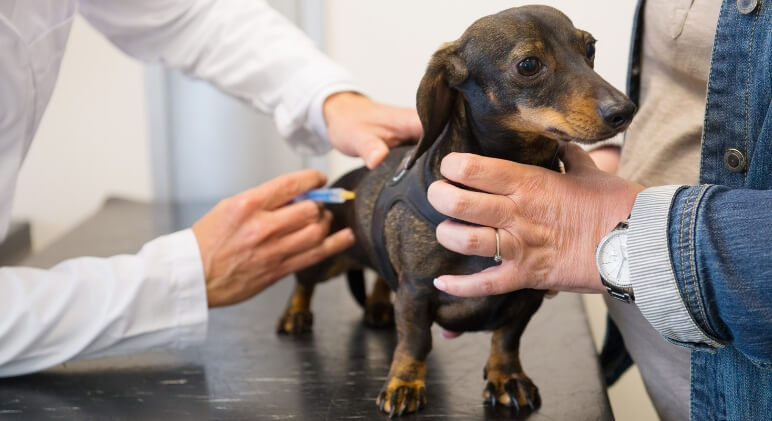
After a vaccine, your dog may feel more tired than usual, sore, not eat as much, experience a little bout of diarrhea, or even throw up. Your vet will go over side effects in greater detail during your visit.
You can also ask your veterinarian for a Benadryl dosage, as this medication can help your pet feel better after vaccines.
If your dog experiences any mild side effects, keep a close eye on him. Serious side effects warrant another trip to the vet.
Titers
Once your puppy has completed his first round of puppy shots and one-year boosters, I’m a huge believer in titers. In case you aren’t familiar with the term, a titer test is a blood test that checks the antibodies for a particular disease. After you get the results, you’ll know whether or not a previous vaccine is still protecting your pup. This is a great way to prevent over-vaccinating. The only downside? Titer tests can be a bit pricey. But, in my opinion, they’re totally worth it.

Avoiding Overload
I currently have two little dogs – a five-pound Chihuahua and an eight-pound Poodle. Whenever it’s time for them to get boosters, I don’t allow my vet to give them more than one shot a day. Instead, I get their Parvo/Distemper booster one day and their rabies shot the following week. This is a personal preference. Since my guys are small, I just don’t like overloading their little bodies with vaccines.