
When most people think about exercising their dog, physical activity comes to mind—long walks, fetch at the park, or a run around the backyard. But did you know that mental stimulation is just as important for your dog’s overall well-being? Dogs are intelligent, curious creatures that crave mental challenges. Without proper enrichment, they can become bored, anxious, and even develop behavioral issues. The good news? Keeping your dog mentally sharp doesn’t require complicated training or fancy tools. With a little creativity and intention, you can easily make mental exercise part of your dog’s everyday routine.
Benefits of Mental Stimulation
Mental stimulation isn’t just about keeping your dog entertained—it plays a vital role in their emotional, cognitive, and behavioral health. Here’s why it matters:
- Bust doggy boredom: Keeping your dog’s brain engaged prevents restlessness and promotes contentment.
- Helps curb unwanted behaviors: Many destructive habits—like chewing, digging, or excessive barking—are rooted in boredom.
- Lower stress levels: Mental challenges can help reduce anxiety and boost your dog’s overall happiness.
- Burn off energy: A mentally stimulated dog is often just as tired (and well-behaved) as one who had a long walk or play session.
- Keep your dog’s mind sharp: Regular brain workouts are especially important for senior dogs to help delay cognitive decline.
6 Ways To Mentally Stimulate Your Dog
1. Enrichment Walks
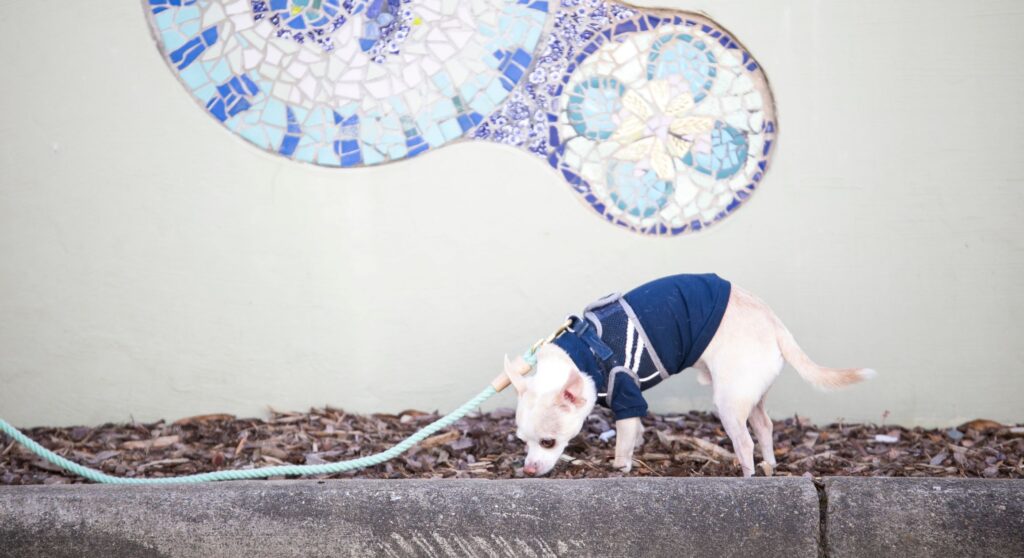
Instead of rushing through a walk just to check the “exercise” box, slow things down and let your dog sniff. These “sniffaris” allow your pup to take in the world through their nose, which is incredibly stimulating and fulfilling for dogs. To make walks even more enriching:
- Change your route often to expose your dog to new smells and environments.
- Give your dog time to investigate different textures, sounds, and sights.
- Try letting your dog lead for part of the walk to make it more of a sensory adventure.
2. Interactive Toys and Puzzles
Game night, anyone? There are a variety of interactive dog puzzles and toys on the market, each requiring slightly different problem-solving skills and challenge levels. But they all have one thing in common — you hide treats somewhere in the puzzle and your dog has to figure out how to get them out. Here are a few of our favorites. Plus, you can see them in action, in the video below.
- KONG Gyro
- Wobble Bowl
- Hide N’ Slide
- Brick Puzzle
- Challenge Slider
- Trixie’s Mad Scientist (AKA The Turnaround)
- Windmill Toy
- Carrot Patch Snuffle Mat
- Snoop Ball
- Double Snoop
You can also make your own interactive dog puzzles/toys with common household items! Check out this video for ideas:
3. Make Your Dog Work For His Food
Along with puzzles that make your pup work for treats, you can also turn your dog’s mealtime into a brain game. If you feed hard food, just drop their kibble into a treat-dispensing ball toy. If you feed fresh food, get a few slow feeders featuring various prong and maze patterns. Spoon your pup’s food between these protrusions and let them work it out! These bowls come in silicone, stainless steel, ceramic, and plastic. Here are some of our favorites:
- Puzzle Feeder Slow Feeder Bowl
- Rainbow Groove Pattern Silicone Slow Feeder
- Honey Comb Groove Pattern Silicone Slow Feeder
- Lickimat SloMo
- Lickimat Wobble
- Outward Hound Slow Feeder Bowl for Small/Medium Dogs

4. Work On New Tricks
Training is one of the best ways to mentally engage your dog and strengthen your bond. Whether you’re reinforcing basic obedience or teaching a fun new trick, learning keeps your dog’s brain working. Start with just 5–10 minutes a day. Be consistent, patient, and keep it positive! As your dog builds confidence, you can increase the challenge by:
- Linking multiple commands together
- Practicing in new environments
- Adding distractions

5. Rotate Toys
Just like we get bored with the same old stuff, so do our dogs. After a few play sessions, that once-new toy is no longer interesting or entertaining. But, the solution isn’t to keep spending cash on more toys … and watching the pile of untouched playthings grow larger. Nope. Instead, try putting your dog’s toys on a rotation!
To avoid toy boredom, stop leaving all of your dog’s toys scattered on the floor – in sight and in reach. Instead, to keep the excitement alive, choose three to five toys to keep out at a time. Stash the rest away in a closed bin and/or closet. Then, after a week or so, swap those initial toys for a different bunch. It’s just like the popular saying: Out of sight, out of mind. So, when you swap one squeaky toy for a crinkle one … or a tug toy for a durable chew one, your dog will most likely play with them as if they’re brand new!
6. Agility Training
Agility isn’t just for high-energy breeds or competitive dogs—it’s a fantastic way to stimulate both body and brain. You can either attend a local class, purchase a course on Amazon (like THIS one), or create your own mini obstacle course at home using items like broomsticks, hula hoops, couch cushions, or laundry baskets. Agility builds focus, confidence, coordination, and problem-solving skills. Plus, it’s a great bonding activity that encourages teamwork between you and your dog.

How do you keep your canine companion mentally stimulated? Let us know in the comments below!