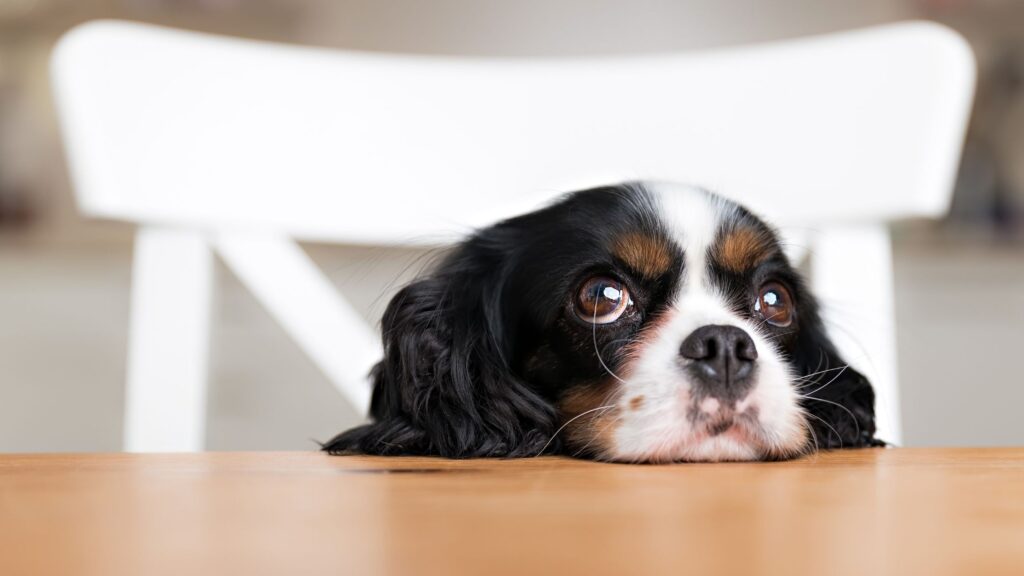
When you sit down at the dinner table and get ready to dig into a delicious meal, do you usually have a little furry friend right by your feet? And does that little furry friend usually look up at you with wide eyes and whine?
It’s no secret: Dogs love food. Since we love our dogs, it’s also no secret many pet parents take one look at those desperate-for-a-bite eyes and immediately bend down to offer a nibble. Sure, your intentions are good. But, here’s the thing: You’re unintentionally encouraging the behavior. Not to mention, a few too many (or the wrong kind of) table scraps can lead to doggy weight gain and potential health issues.
First Things First …
Preventing unwanted behaviors from forming is always easier than fixing them. If your dog isn’t a begger then don’t engage in poor feeding activities — like the scenario I mentioned above — that will make your dog become one.
Whether you’re priming your pup to never become a begger or you’re working to fix bad begging habits, consider the following tips.
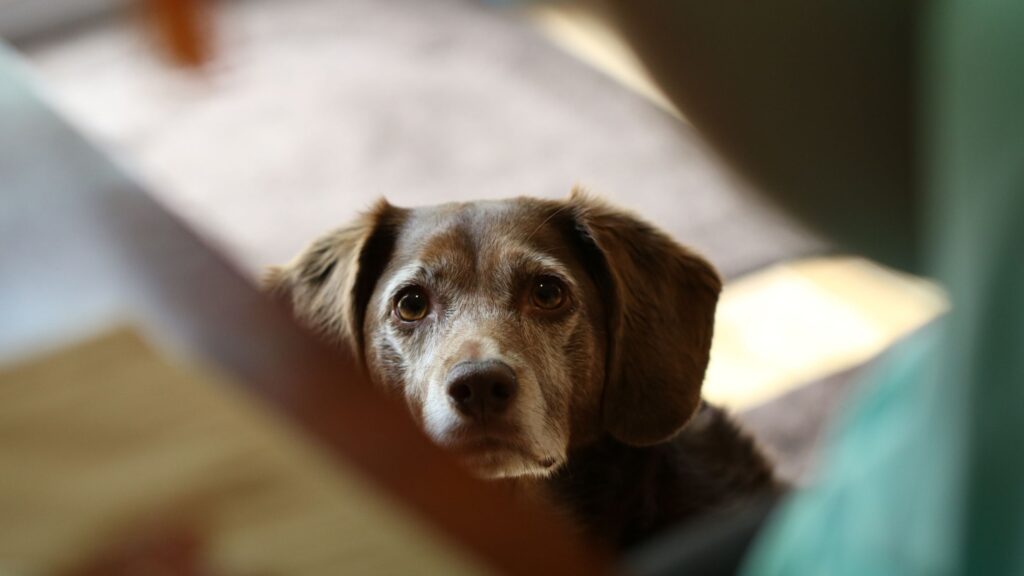
Time Your Dog’s Meals to Match Yours
In my house, the people and the dogs eat at the same time. Since puppies typically eat three times a day and the average adult dog eats twice daily (or once daily), it’s pretty easy to time their meals to match your own.
Once everyone’s meals are prepped and ready to serve, set your dish down on the table, and then place your pup’s food bowl on the floor … in a separate room. Your pup will be too busy indulging in his own food to worry about yours. Plus, putting a little distance between your meals helps create boundaries.
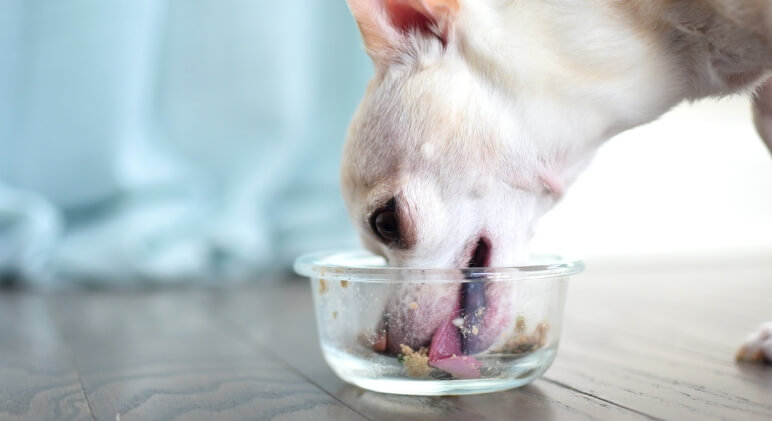
Speed eater?
If you have a speed eater on your hands then you’ll want to slow him down for a few reasons.
- It’s not healthy for your pup to eat too quickly (it can lead to choking, gagging, vomiting, and bloat).
- The goal is to keep your pup busy for as long as possible, while you enjoy your meal.
You can slow your speed eater down by:
- Using a special slow feeder bowl that features various prong and maze patterns. By spooning your pup’s food between these protrusions, your dog won’t be able to grab and gobble large bites at once, helping to slow down mealtime.
- If you don’t want to buy a slow feeder then you can replicate the same basic idea with a muffin tin! Grab your muffin tin, spoon a little bit of your dog’s food into each individual cup, and then give it to your pooch. The need to move from cup to cup will help your pooch slow down.
- Feed fresh food? Smear it onto a LickiMat and make your pup work it off.
- Stuff your pup’s food into a classic KONG and make your pup work it out.
- If you feed your dog hard Kibble then you can easily dole their proper portion into an interactive puzzle toy or maze ball. This will naturally slow your pup down because they need to work for their food. Along with filling their belly, this activity will also fire up your pup’s mind and make him tired. So, he’s more likely to relax and nap after his meal!
Ignore Begging and Redirect to a New “Place”
Once your pup is done chowing down on his meal, does he rush into your dining room and beg for food from your plate? One of the best things you can do is add some distance. This can be achieved through a crate, indoor exercise pen filled with special toys, pet gate, or the Place command.
Place – The Place command teaches your dog to go to a specific spot and stay there until they’re given a release cue. This spot could be a purposefully placed mat, blanket, or dog bed. Teaching the place command enhances communication with your pup and can help eliminate many undesirable behaviors (since a dog can’t beg for food under your feet or jump on guests as they walk through the front door while sitting in their “place”).
For an introduction to training the Place command, check out this video by Zac George. It’s filled with some great tips!
Consistency is Key
While it may be hard to resist the begging, caving into your crying pup reinforces and encourages the unwanted behavior. Even just a nibble here and bite there teaches your dog: whining = getting what I want. Canines are very result-driven creatures and begin to associate their actions with certain outcomes. So the more food you offer, the more your pup will beg.
Make sure everyone in your household is on the same page and follows the same rules … 100% of the time. Because if Ms. Dog Mom avoids feeding table scraps and leftovers from her plate, but Mr. Dog Dad continues to sneak some bites under the table, then Baby Pup is never going to learn.
Remember: Consistent actions create consistent results!