
Who else is ready to dig into a delicious Christmas feast? I’m drooling just thinking about it! While it may be tempting to let your dog enjoy a few nibbles from the holiday table, not all traditional Christmas foods are safe for them. So, before you share anything from your plate, read on to find out which food made the no-go list and why.
1. Jazzed Up Holiday Turkey
Do you make a turkey for your Christmas feast? While turkey itself is fine for dogs, holiday birds are another story because they’re rarely cooked and served plain. Rather, they’re typically seasoned and infused with ingredients such as onions, garlic, and salt. What about sugar? Then there are the overly fatty butter and oils. Letting your dog indulge in the holiday bird could result in an upset stomach, pancreatitis, or worse. So, rather than tossing a pooch a seasoned piece of turkey drenched in gravy, make your dog their own delicious turkey morsels. Here are some options:
2. Other Fatty Meats
Not serving turkey this Christmas? Many families make ham, lamb, or prime rib instead. No matter what meat you cook up for your holiday feast, it’s important to keep your pooch away from the seasoned and overly fatty pieces. Like I mentioned just a minute ago, too much fat can lead to pancreatitis in dogs. Read more about pancreatitis in dogs HERE.
3. Cooked Bones
Never give your pooch cooked chicken, turkey, or other meat bones. Many of these cooked bones are brittle, making them unsafe for your dog. Some potential dangers include:
- Splintering of the bones
- Cuts and/or scrapes in your dog’s mouth
- Choking hazard
- Intestinal blockage
- Gastrointestinal bleeds
Be mindful of any bone hazards on the kitchen counter, table, or trash so your crafty little pooch doesn’t make his own help-yourself-buffet when you’re not looking.

4. Gravy
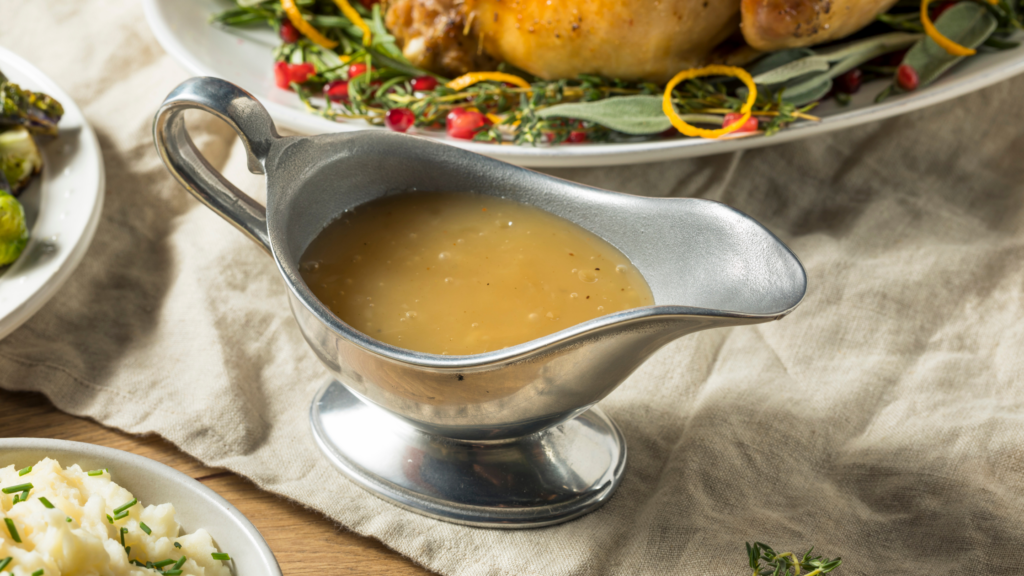
Gravy may transform your holiday meat from bland to grand, but it’s definitely not something you should share with your pooch. It’s often loaded with onions, garlic, various spices, and flavorful herbs that aren’t safe for dogs. Even if you don’t spice up your gravy, though, fatty and rich sauces could give your dog diarrhea.
5. Green Bean Casserole
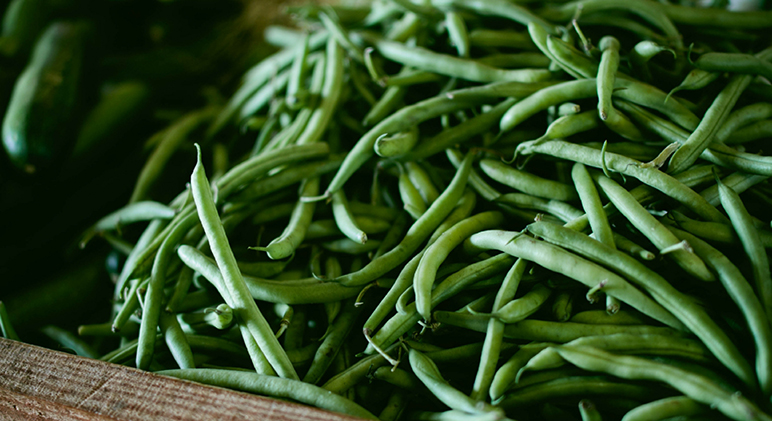
Do you ever give your dog boiled or dehydrated green beans as a healthy snack? Sure, plain green beans are great for dogs (especially overweight canines who are looking for a little something low-calorie to nibble on). But, the green beans in holiday casseroles are usually coated in butter, cream, mushroom soup, and onions (AKA foods your dog should stay away from).
6. Corn on the Cob
While plain and cooked corn kernels aren’t dangerous to our dogs, pet parents need to keep corn on their cobs far away from their furry family members. If your dog nibbles on, and then swallows, the cob, there is a risk of choking and serious intestinal blockage. According to VetsNow: “Corn cobs are treated as ‘foreign bodies’ so your vet will perform a full physical examination and may also carry out blood tests, x-rays, and an ultrasound. Your dog may have to go under general anesthetic to have the foreign object removed. The health of your dog’s intestine will be assessed and in the most serious cases, it may also be necessary to remove a portion of the damaged intestine.”
7. Raw Yeast Dough
Baking homemade bread and biscuits this holiday? Don’t leave your yeast dough on the counter unattended because it can harm your pooch in a couple of ways. When yeast dough sits in a dog’s stomach, it can expand due to the warm and moist environment. This can cause stomach upset, bloat, twisting of the stomach, or even death. Additionally, the yeast dough can ferment in the stomach, which morphs into alcohol and carbon dioxide. The alcohol can become toxic very quickly as it’s rapidly absorbed into the dogs G.I. tract.

8. Alcohol
Tis the season to be jolly! If you plan on popping a bottle of bubbly, whipping up peppermint martinis, or downing a beer, make sure to keep your drink far away from your four-legged friends. If your dog does drink alcohol, ethanol will be absorbed into his system. It’s important to understand that a dog’s metabolism can’t process ethanol like yours can. Your pooch will likely get drunk and experience symptoms such as confusion, lack of coordination, difficulty breathing, and even seizures. If your dog does lap up your booze, call your emergency vet immediately.

9. Nutmeg
Like to add a little nutmeg to your Christmas eggnog or mix it into one of your holiday desserts? While it may be a delicious addition to your festive drinks/foods, it’s toxic to our canine companions. According to the Pet Poison Helpline: “Nutmeg contains a toxin called myristicin. The small amount of nutmeg used in recipes is very unlikely to cause serious toxicity, though mild stomach upset could occur if a small amount is ingested. If a very large amount of nutmeg is ingested, myristicin toxicity can cause symptoms including hallucinations, disorientation, increased heart rate, high blood pressure, dry mouth, abdominal pain, and possibly seizures. Symptoms can last up to 48 hours.”
10. Christmas Pudding
There are several ingredients in a traditional Christmas pudding recipe that make it a no-no for dogs. One of the main issues that immediately come to mind is raisins. It is well documented that even small amounts of them can cause kidney failure and death in our dogs.
11. Chocolate Desserts
While most people know that chocolate is toxic to dogs, you may be surprised to find out how many dogs still get their paws on the sweet stuff. Theobromine and caffeine are two compounds in chocolate that stimulate the nervous system, causing severe symptoms. Find out more about chocolate poisoning in dogs HERE.

Wishing everyone a safe and Merry Christmas!