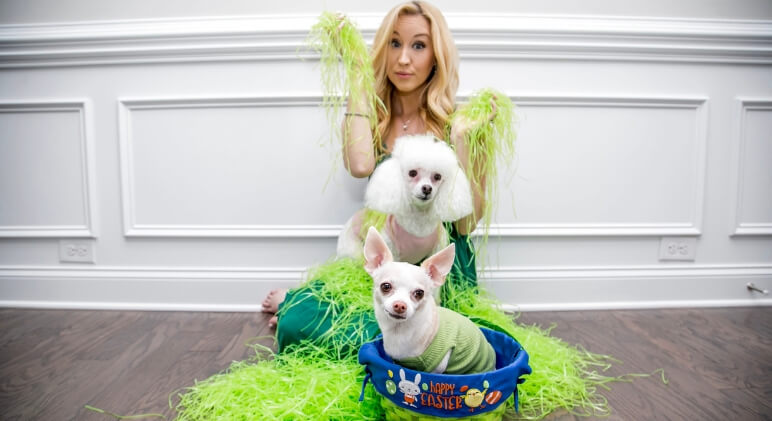
As the countdown to Easter begins, many of us are looking forward to coloring eggs, hunting for treat-filled eggs, eating yummy chocolates, digging into a scrumptious holiday dinner, and spending time with family. Amidst the egg-citement of the season, it’s easy to overlook potential hazards that could put our beloved pups at risk. That’s why we’ve compiled a list of tips to keep your furry family member safe this Easter! Let’s hop right in …
1. Keep The Chocolate Away
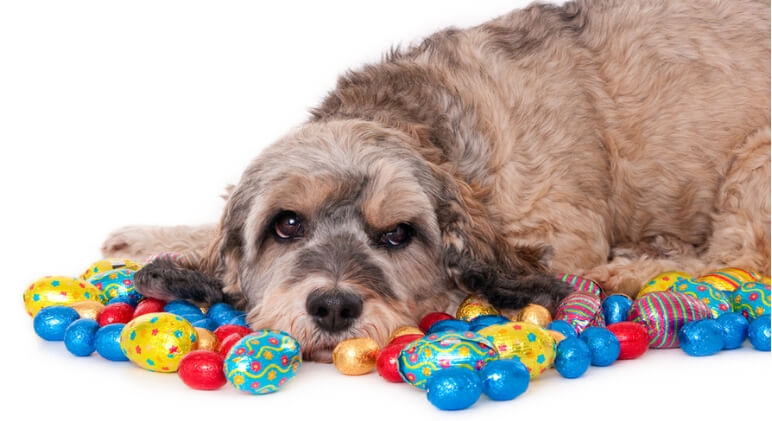
You probably already know chocolate is a no-go for our four-legged family members. But, do you know why? The answer is theobromine and caffeine. Those are the two compounds in chocolate that stimulate our dogs’ nervous systems, which can cause serious symptoms. The amount of theobromine varies with the type of chocolate — the darker and more bitter the chocolate, the more dangerous it is to dogs. Still, your dogs should stay clear of ALL chocolate.
While the ASPCA Animal Poison Control Center receives calls about dogs consuming chocolate daily, numbers spike on holidays such as Easter, Halloween, Valentine’s Day, and Christmas. If you think your pet may have ingested a potentially poisonous substance, contact your vet immediately and/or call the ASPCA Animal Poison Control Center – (888) 426-4435.
2. Watch Candy & Other Treats
Along with chocolate, Easter baskets are usually filled with jelly beans and other sweet treats that should be kept far away from Fido. In some cases, Easter candy may contain xylitol, a sugar substitute that’s toxic to dogs (even in very small amounts). If your pooch consumes xylitol, it could lead to a steep drop in blood sugar, liver damage, and even death. Think that your dog has eaten xylitol? It’s critical to see a vet or an animal ER immediately. In as little as 30-60 minutes, the effects of xylitol can be deadly.
3. Avoid Easter Basket Grass
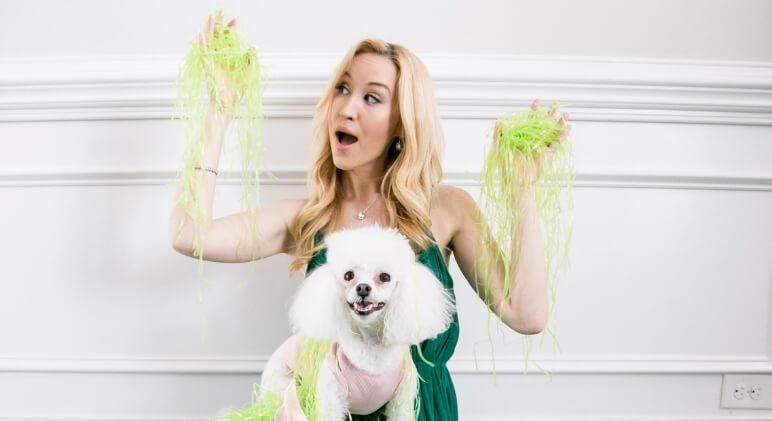
As a kid, I remember waking up on Easter morning to a basket full of goodies on top of fun grass-like cellophane strands. While the fake grass is a nice touch, it can be dangerous for dogs if accidentally ingested. The main danger: If a dog ingests Easter grass, it can get tangled up in their digestive system and cause an intestinal blockage. This can be a serious and potentially life-threatening condition that requires immediate veterinary attention. To avoid little cellophane strands from floating and getting all over your floor … and perhaps into your dog’s mouth … use tissue paper instead. It’s easier to manage and eventually toss in the trash once your kiddos are done unwrapping their goodies!
4. Watch Other Goodies In Easter Baskets
Along with yummy treats, Easter baskets are often filled with small plush toys, silly putty, slime, paint, stickers, games, etc. If you have a curious canine, he may feel tempted to grab and chew on some of these holiday goodies. To avoid a choking risk, be mindful of where these Easter basket prizes land.
5. Watch Out For Plastic Easter Eggs
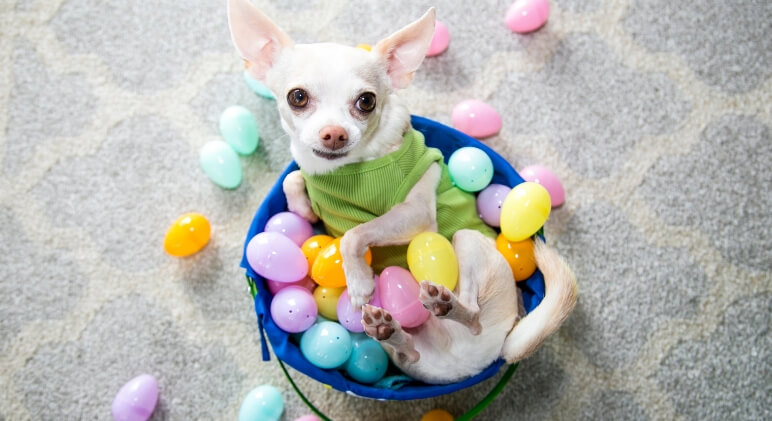
Is your dog a natural gobbler who views nearly everything as a personal chew toy? If so, you’ll want to be extra careful with those plastic Easter eggs … especially if you’re planning on stuffing them with chocolate and treats and then hiding them around your house/yard. If your dog eats a fake plastic egg, it can cause intestinal problems. For your at-home Easter egg hunt, keep track of the number of eggs you hide in your yard and where they are. That way, once the kids are done hunting, you can double-check your hiding spots so no plastic eggs are left behind!
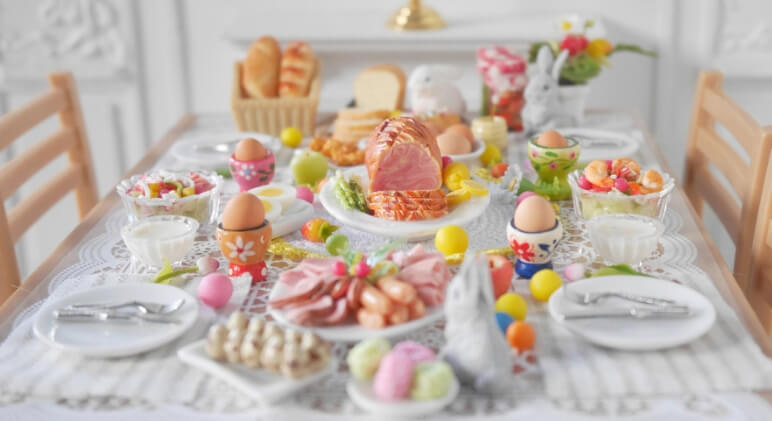
6. Don’t Share Certain Dinner Foods
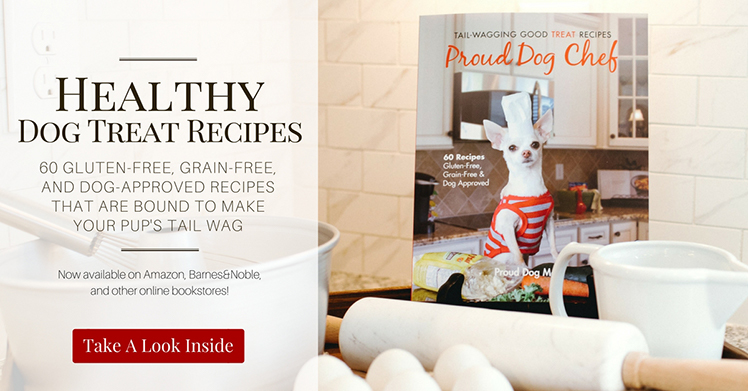
Holiday meals are often filled with seasonings, ingredients, and fats that aren’t safe for our pups. For example, onions are toxic to dogs … so the oh-so-popular green bean casserole is off-limits to our canine companions. Corn on the cob is another no-go dish. If your dog nibbles on, and then swallows the cob, there is a risk of choking and serious intestinal blockage. Plus, fatty meats and gravies can lead to a trip to your local vet’s office and a pancreatitis diagnosis. So, it’s best to avoid sharing. Instead of sharing the food from your plate, prepare your pup his own special treat/meal. In my cookbook, Proud Dog Chef: Tail Wagging Good Treat Recipes, I share a recipe for Doggy Deviled Eggs. They’re perfect for the upcoming holiday! Don’t have a physical copy? You can get the recipe right now by downloading the Kindle e-book version.
7. Absolutely No Alcohol
Speaking of my cookbook, inside, I include an entire list of yes/no foods that dogs can and cannot eat. The first thing listed under my “No” list is alcohol. No amount of alcohol is safe for canines and you should never leave an unattended glass of wine, beer, or liquor around your four-legged family member. A drunk you may be hilarious, but a drunk dog is just dangerous!
Happy Easter!