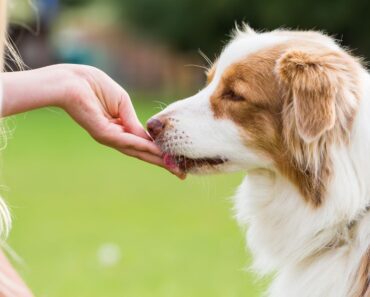

It’s undeniable: Dogs and humans have a special relationship rooted in love and loyalty. After all, there’s a reason we call dogs “man’s best friend!” Countless studies have looked into the strong human-dog bond, and even science will tell you: We love our dogs … and our dogs love us!
The Evolutionary Connection
The connection between humans and dogs traces back thousands of years. It’s believed that ancient humans, living as nomadic hunters and gatherers, developed a relationship with wolves (AKA the ancestors of modern-day dogs). Most experts agree that less aggressive wolves might have scavenged for food near human campsites, ultimately leading to a gradual bond and the domestication process. As humans transitioned from nomadic lifestyles to settled agricultural communities, dogs reportedly played pivotal roles as hunting partners, guardians, and, eventually, companions.
Even Science Says the Human-Dog Bond is Real!
If you share your home and life with a dog then you know how special the human-dog bond is. And we certainly don’t need a scientist to tell us the love we share is real. However, many studies have looked into the human-canine relationship and they’re actually quite interesting!
Many experts say our emotional bond with dogs involves a complex interplay of neurochemicals. Have you ever heard of oxytocin? It’s often called the “love hormone,” and it plays a crucial role in forming social connections. Studies have shown that both dogs and humans experience an increase in oxytocin levels during positive interactions, such as gazing into each other’s eyes.
Takefumi Kikusui, an animal behaviorist at Azabu University in Sagamihara, Japan, found that to be true. In his study, researchers investigated the concentration of oxytocin in urine before and after owners and their dogs interacted. The results revealed a remarkable correlation between the duration of eye contact and oxytocin levels in both dogs and their human companions. When owners and dogs engaged in prolonged eye contact, oxytocin levels surged, mirroring the biological foundations of human social bonds.

Communication
When we look at the amazing human-canine connection, many experts also bring up our ability to communicate with one another. Sure, we may not speak the same language, but we’re both highly attuned to each other’s feelings.
Experts say dogs can read our body language, facial expressions, and vocal cues. They can pick up on our emotions, sensing when we’re happy, sad, scared, etc. Does your dog respond differently to your various emotions? Here are two interesting studies:
#1: Research led by Corsin A. Müller at the University of Veterinary Medicine Vienna explored dogs’ ability to recognize and respond to human emotions. Dogs were shown various photos (of the same person) and trained to discriminate between a happy or an angry face. In every case, the dogs were shown only the upper or lower half of the face. After focusing on 15 picture pairs, the dogs were put to the test. Researchers used four criteria when testing the dogs: (i) the same half of the faces as in the training but of novel faces, (ii) the other half of the faces used in training, (iii) the other half of novel faces, and (iv) the left half of the faces used in training. The study found that dogs could differentiate between human facial expressions!
#2 Researchers at the University of London Department of Psychology found that dogs are more likely to approach someone who is crying than someone who is casually talking or humming. The study observed 18 pet dogs. The dogs were exposed to four separate 20-second experimental conditions in which either the dog’s owner/guardian or an unfamiliar person pretended to cry, hum, or engage in a casual conversation. The results: 15 approached the owner or investigator when they “cried” as opposed to only 6 when they hummed. The dogs were responding to the person’s emotions rather than their own needs.
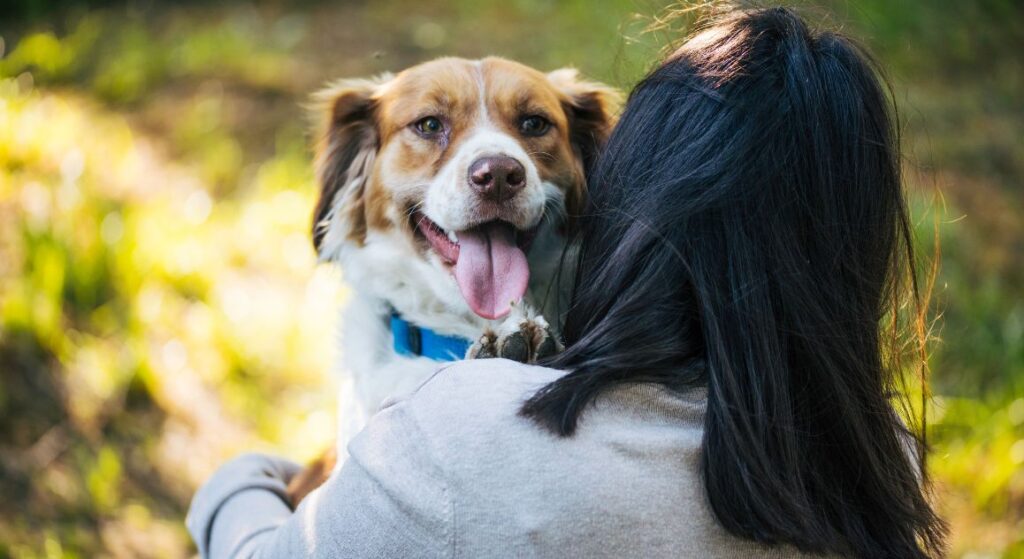
And then there’s us humans …
Through close observation, we’ve also been able to learn what our dogs are “saying.” We can interpret clear canine body language and have even learned to decode different barks/whines. That’s pretty amazing! Love learning about dog behaviors? Check out THIS article where we explore 12 common dog behaviors.
A Mutually Beneficial Bond
It may be clear how dogs benefit from our relationship with them. We provide shelter, food, water, and affection! But, did you know dogs also have a profound impact on us? Studies show there are many therapeutic benefits:
- Enhanced Mood: Spending time with dogs triggers the release of endorphins, the body’s natural feel-good chemicals.
- Reduced Anxiety and Depression: Dogs offer unconditional love and support, which can alleviate symptoms of anxiety and depression. Along with that release of endorphins, the routine and responsibility of caring for a dog also provide structure and purpose, promoting mental health.
- Improved Physical Health: Owning a dog encourages physical activity through activities like walking, playing, and exercising. This can contribute to weight management, increased fitness, and improved physical health.
- Lower Blood Pressure: Studies have shown a link between dog ownership and lower blood pressure/heart rate.
- Heart Health: A study led by Dr. Glenn N. Levine suggested owning a dog was associated with a reduced risk of heart disease and increased survival rates for heart attack and stroke patients. Check out this video by the American Heart Association for some impressive stats:
Plus, we can’t forget about the incredible working dogs who are trained to assist visually impaired people, the hearing impaired, the physically impaired, those who suffer from seizures, are diabetic, and the list goes on. Check out THIS article to learn about 8 types of assistance dogs and the amazing work they do!